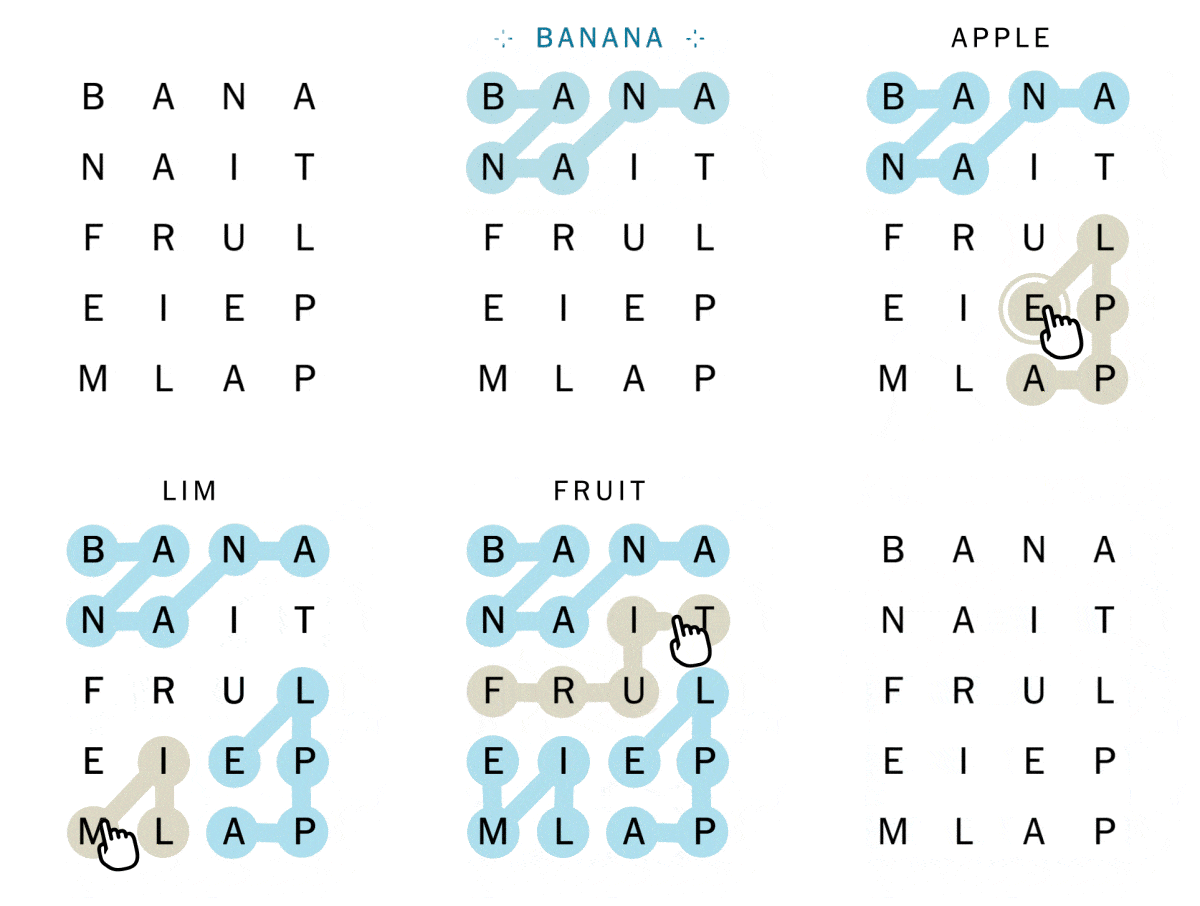
Strands look simple at first glance. You see a grid filled with letters. Your goal is to find words which is related to a particular theme. When you start playing, you quickly come to know that it’s not that easy to find the right words.
The biggest challenge is not simply finding words. It is figuring out which words belong to the theme.
Sometimes a word can be perfectly valid. But it might not be related to the puzzle’s theme. It can also happen that the theme is so cleverly hidden. You need to find a few related words before everything starts making sense.
The good thing is there are various ways to spot theme words. When you practice regularly, you can recognize patterns precisely. You will also be able to connect clues and identify relevant words.
What are Theme Words in Strands?
Theme words are the words hidden in the letter grid which are related to the puzzle’s daily theme. For instance, if the theme is related to things found in a kitchen, possible theme words could include objects, food or appliances associated with that idea.
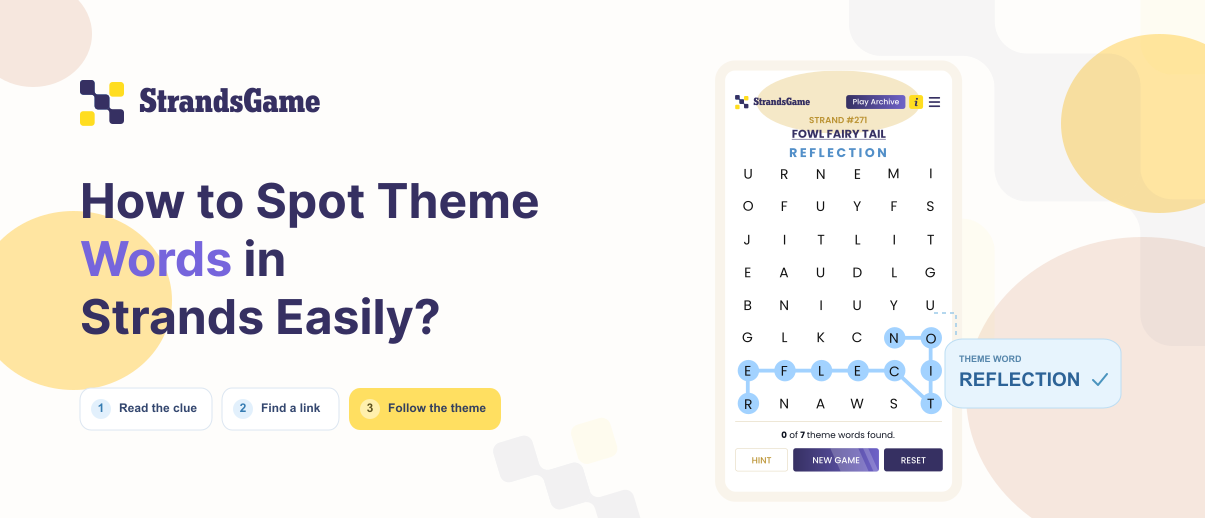
In the image below, the theme words are relevant to a city like what a city is called. For example, The Space City. This is the nickname for Houston.
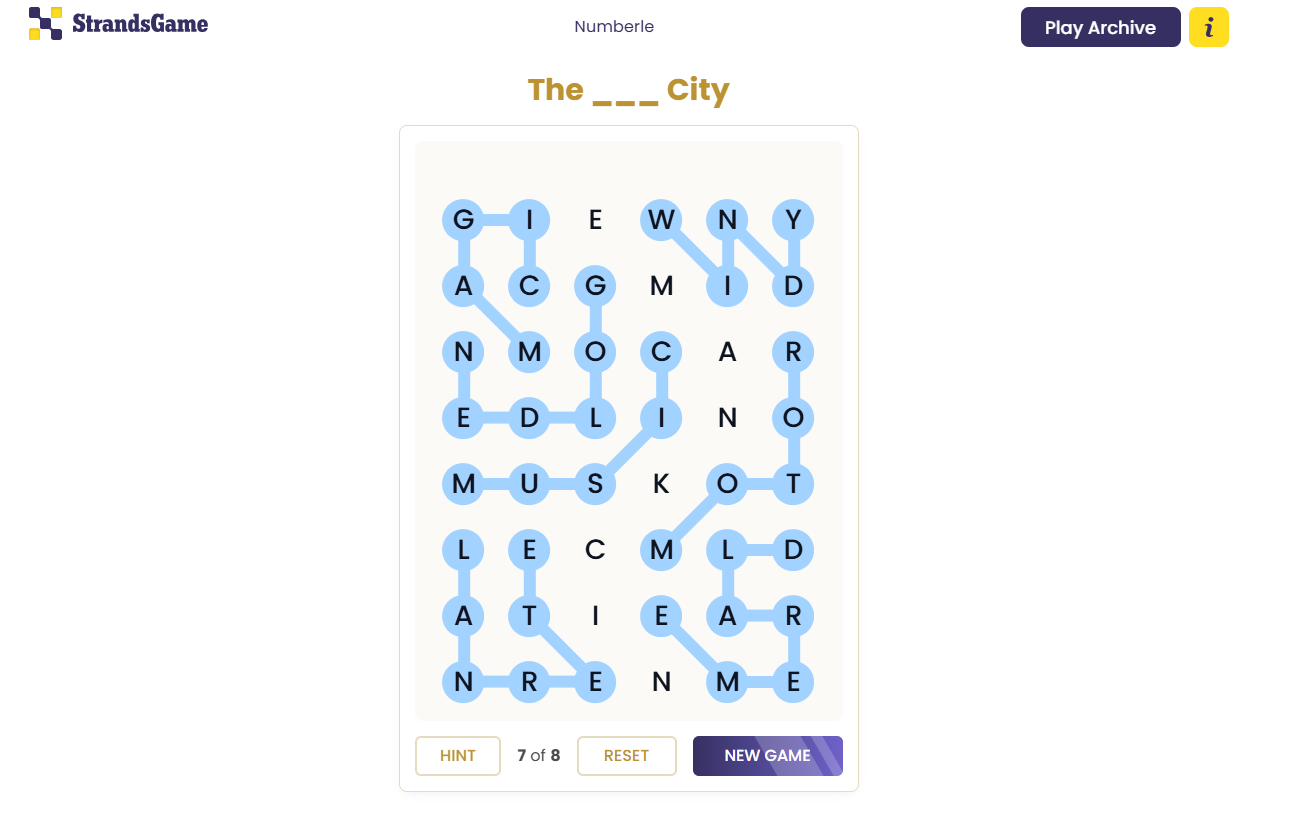
An important point to remember is that the theme doesn’t always describe the words in an obvious way. A puzzle may use a broad category, a phrase, a wordplay clue or an indirect connection.
This is why understanding the theme is just as important as searching the grid.
Understanding the Theme
Before you start looking randomly. You need to spend a few seconds thinking about the theme. Ask yourself:
What could it be related to?
Is it about place, objects, people or concepts?
Could the theme have more than one meaning?
Are there common words in it?
Does the wording suggest a particular category?
You need to try to create a small mental list of words that could fit the theme.
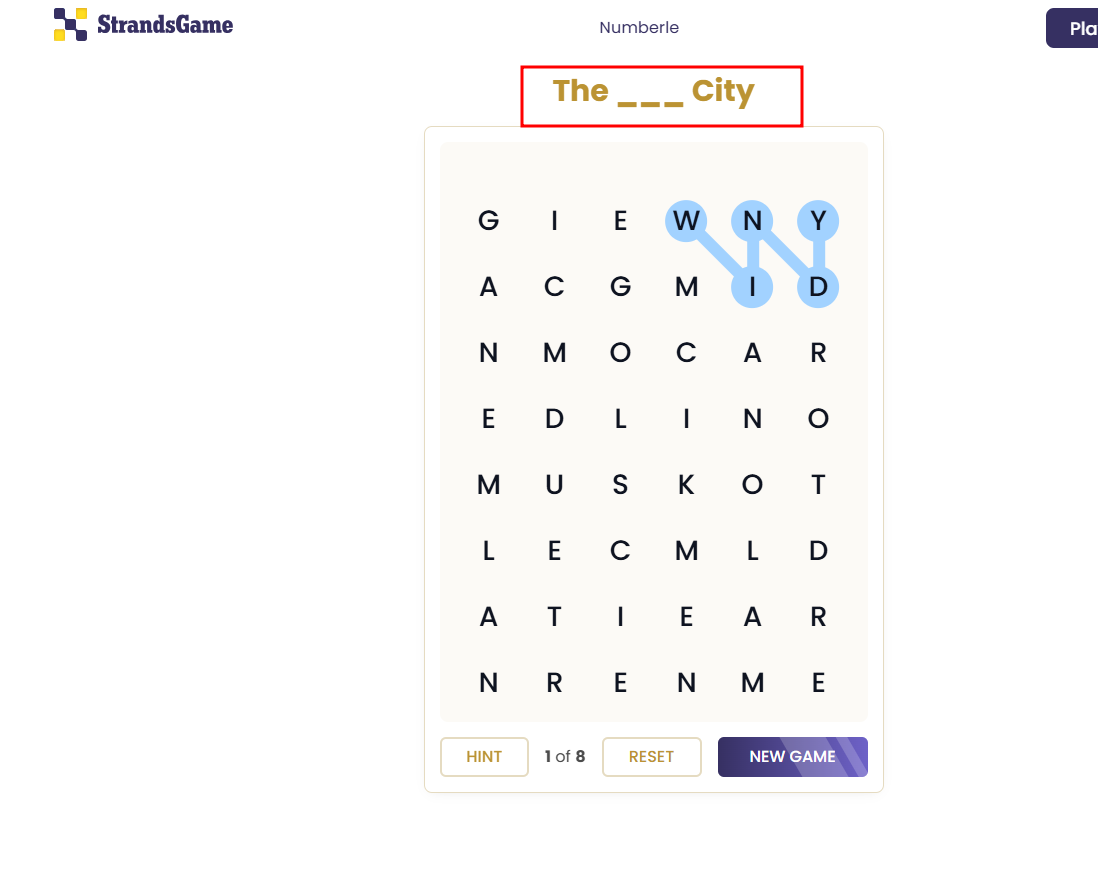
For example, in the above image the theme says “The __ City. It suggests that the exact word is maybe a nickname of various cities.
You may not find these exact words in the grid. But thinking about related vocabulary gives you a starting point.
Find an Easy Word First
You don’t need to solve the puzzle in one go. Search for a word you recognize easily. If you are able to find even a single theme word, it will give you valuable information about what the puzzle is looking for.
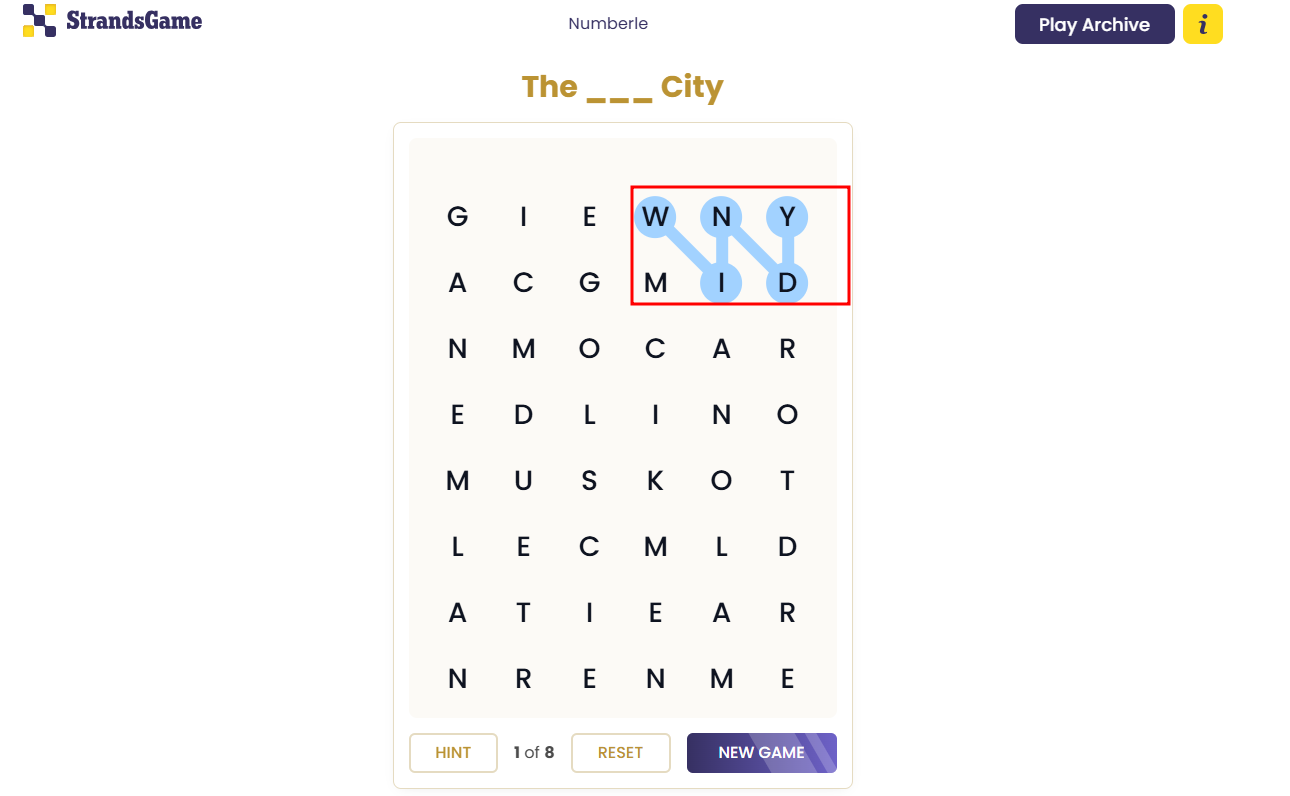
In the above image, you can see that we connect letters to make the word “Windy” which is a nickname for Chicago.
So this word clearly matches the theme. Think about what other words could belong to the same category. This creates a chain of associations. One word can lead you to another. Thus, the theme becomes much clearer.
Look for Related Words
Once you find one possible theme word. Don't immediately search for something completely different. Think about how it relates to the theme.
If you find WINDY, for example, ask yourself what other words might be associated with windy. This is particularly useful because Strands themes can sometimes have multiple interpretations.
Rather than asking: “What word can I make from these letters?” You need to ask: “What word can I make that fits the theme?” This small change can make the puzzle much easier.
Pay Attention to Unusual Words
One of the most useful techniques is to see words that feel slightly unusual. Strands doesn’t necessarily use only everyday vocabulary. You may face a word that you recognize but rarely use.
If a strange looking word appears in the grid and it seems connected to the theme, don’t dismiss it immediately.
Try to know if it fits the theme.
You can also improve your reasoning by playing this game. When a word doesn’t instantly look familiar. You can see its surrounding letters and the puzzle's theme. It will provide clues to help you understand what it could be.
Use Hints Wisely
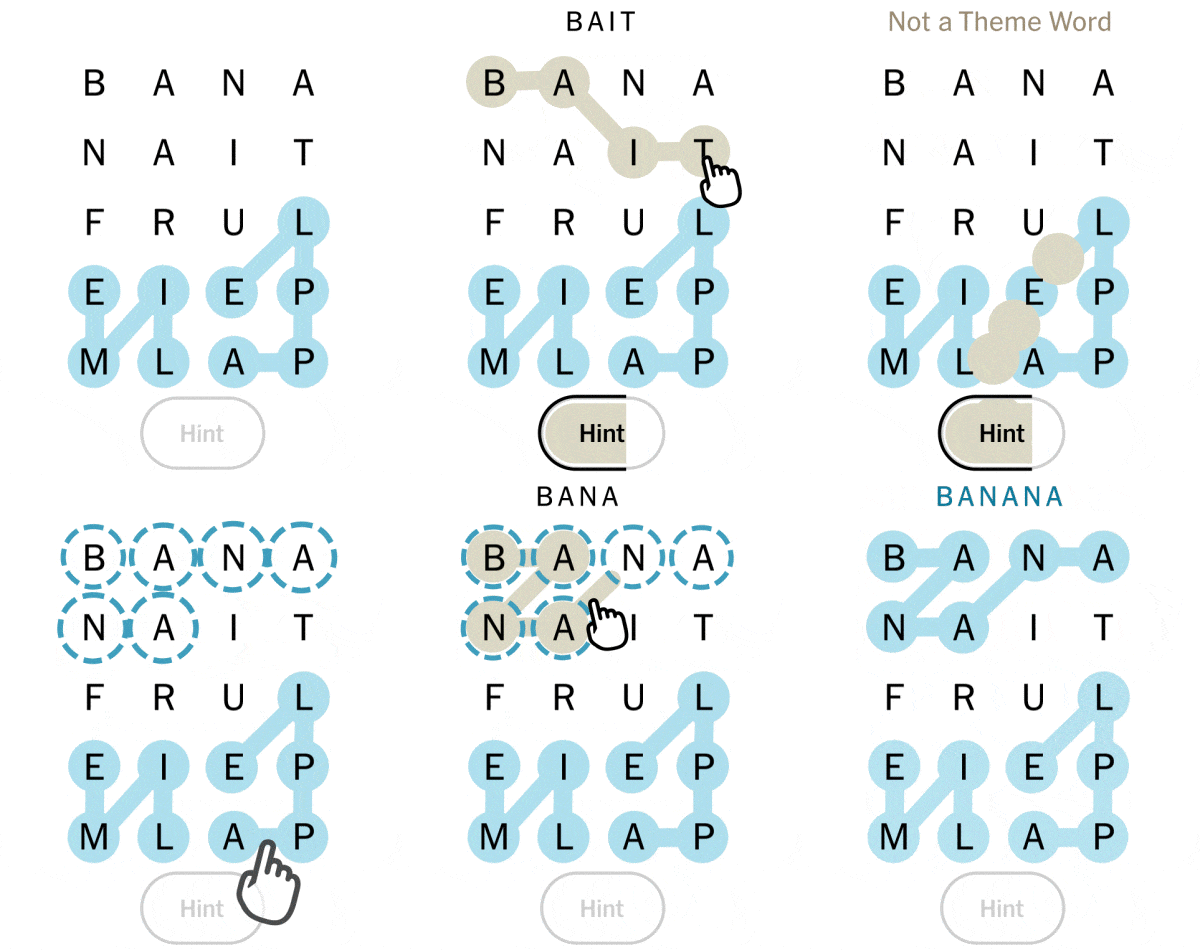
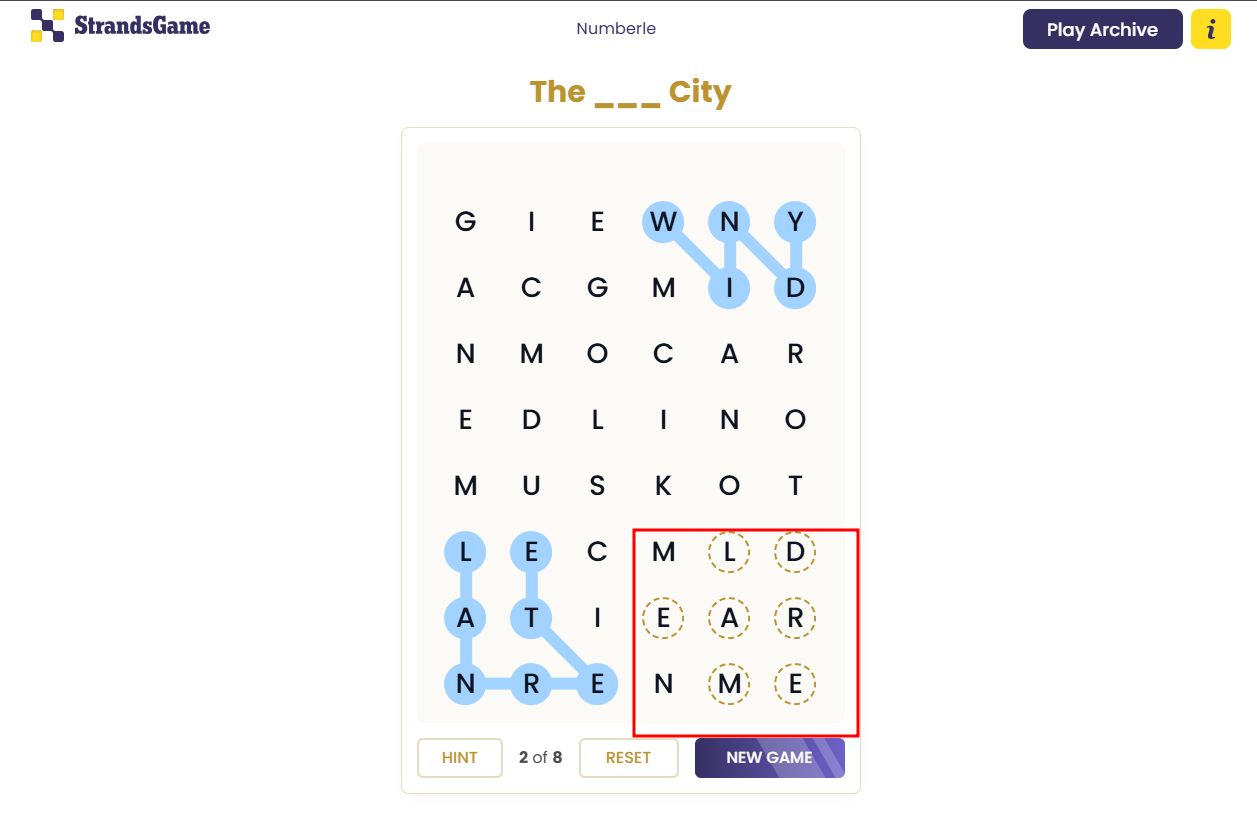
If you're truly stuck, Strands helps you with hints. Every time you find three valid words that aren't theme words, you unlock a hint that reveals the letters of one theme word.
Hence wrong words are not a waste. If you can't find a theme word, simply find a non themed 4 letters word. After you find 3 non themed words, the Hint bar will get filled. You can click on it to get theme letters encircled. This will help you get other words.
Use the Spangram
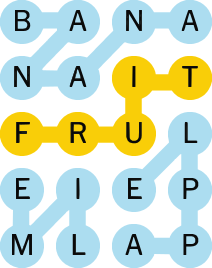
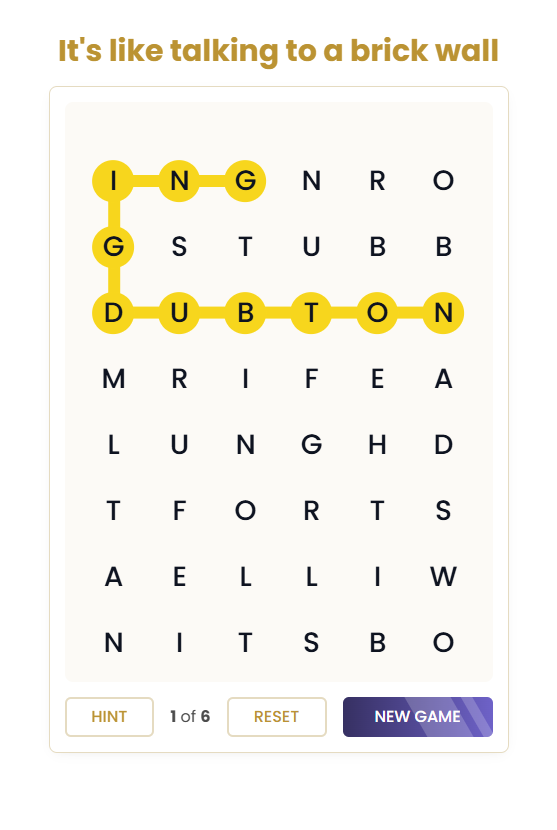
Every Strands puzzle has a Spangram. It is a special phrase or a word that explains the theme. The spangram starts from one side of the board and ends at the opposite side. When you find it, it's highlighted in yellow, not in blue like theme words.
The spangram is important in the entire puzzle. Once you know it, the remaining theme words usually become much easier to predict. If you're stuck, try looking for long letter chains. This will run across the full width or height of the grid.
Watch for Common Letter Patterns
Theme words in the same puzzle usually have a common structure or pattern. They might all be plurals, end in "-ING," or share a similar length. If one word ends in a certain pattern. You need to analyze the grid for that same combination of letters.
It also helps to look at tricky letters like Q, X, Z, or J. These letters can only fit into a limited number of words. So they often lead you straight to a theme word.
Remember That Every Letter is Used
In Strands, every letter on the board belongs to either a theme word or the spangram. Also the words never overlap. As you find more words, the remaining letters shrink, which makes the last few words easier to spot.
Letters stuck in corners or along the edges are especially useful. They have fewer neighbors. So there are only a few ways they can connect.
Final Thoughts
Spotting theme words in Strands becomes easy when you start approaching the puzzle. Start by thinking about the theme. Find one easy word. Use it to discover related words. You need to see unusual vocabulary and letter patterns. Also you need to see the Spangram. Don't hesitate to use hints when you need them.
When you start practicing regularly. You'll start recognizing themes faster. This will help you solve puzzles with fewer hints. Strands isn't just about finding words. It's about understanding how they connect.
FAQs
In which directions can letters be connected in Strands?
Letters are connected horizontally, vertically and diagonally. A single word can change direction several times. So theme words usually bend or in a zigzag direction and not in a straight line.
How many theme words are in a Strands puzzle?
It usually includes six to eight theme words including the Spangram. The game shows a counter of how many theme words you've found out of the total. So you always know how many are left.
How big is the Strands grid?
The board is 6 letters wide and 8 letters tall. It makes 48 letters in total. Because every letter is used, the lengths of all the theme words and the spangram add up to 48.
Do I have to find the spangram before the other theme words?
No. You can find the Spangram in any order. Some players find the Spangram first. While some of the players find theme words first and then move towards finding the Spangram.
What happens if I use a hint and still can't find the word?
If you already have an active hint and get another one. You can use it on the same word. It will then show the letters in the correct order. The word is essentially highlighted one by one for you. So you only need to connect it.
Does using hints affect my result?
No. Using hints doesn’t affect the result. There's no score penalty. But hints appear in your shareable results. Theme words show as blue circles, the spangram as a yellow circle and each hint as a lightbulb. Hence others can see how many hints you used.
Is there a time limit in Strands?
No. There's no timer. No limits for guesses. You can take as long as you need and return to the puzzle later that day.
How is Strands different from a traditional word search?
In a regular word search, you're given a list of words that run in straight lines and can overlap. In Strands, you aren't told the words. They can bend in any direction. They never overlap and they fill the whole board, so you have to work out both the theme and the words themselves.