What if you could improve reasoning skills by just playing a game? You will definitely go for it, right? But not every game has the ability to improve reasoning and decision making skills. Only some games lead to improvements. Strands, Numberle, Sudoku etc are some of these.
Logical reasoning is an effective way to improve analytical capabilities and learn pattern recognition. Not just that, games also improve cognitive skills. But do you ever try to understand how playing games can be useful, and how it improves learning habits?
People sometimes also try to learn about reasoning.
What Does Reasoning Refer to?
Reasoning is something that we continuously use. We make decisions, solve problems, plan ahead, understand information or determine why something happens.
Someone with strong reasoning can look at a situation from different angles. They will be able to recognize patterns, choose the most logical solution and connect ideas.
The good thing is you can develop reasoning beyond textbooks, lengthy study sessions and complicated exercises. Individuals can develop reasoning by playing brain and puzzle games as well. These games turn mental practice into an enjoyable daily habit.
Which Games Can Improve Reasoning?
We searched and played various games. We were trying to find games that you can finish in 2 - 5 minutes and that can help improve reasoning as well. These games are as follows:
Strands
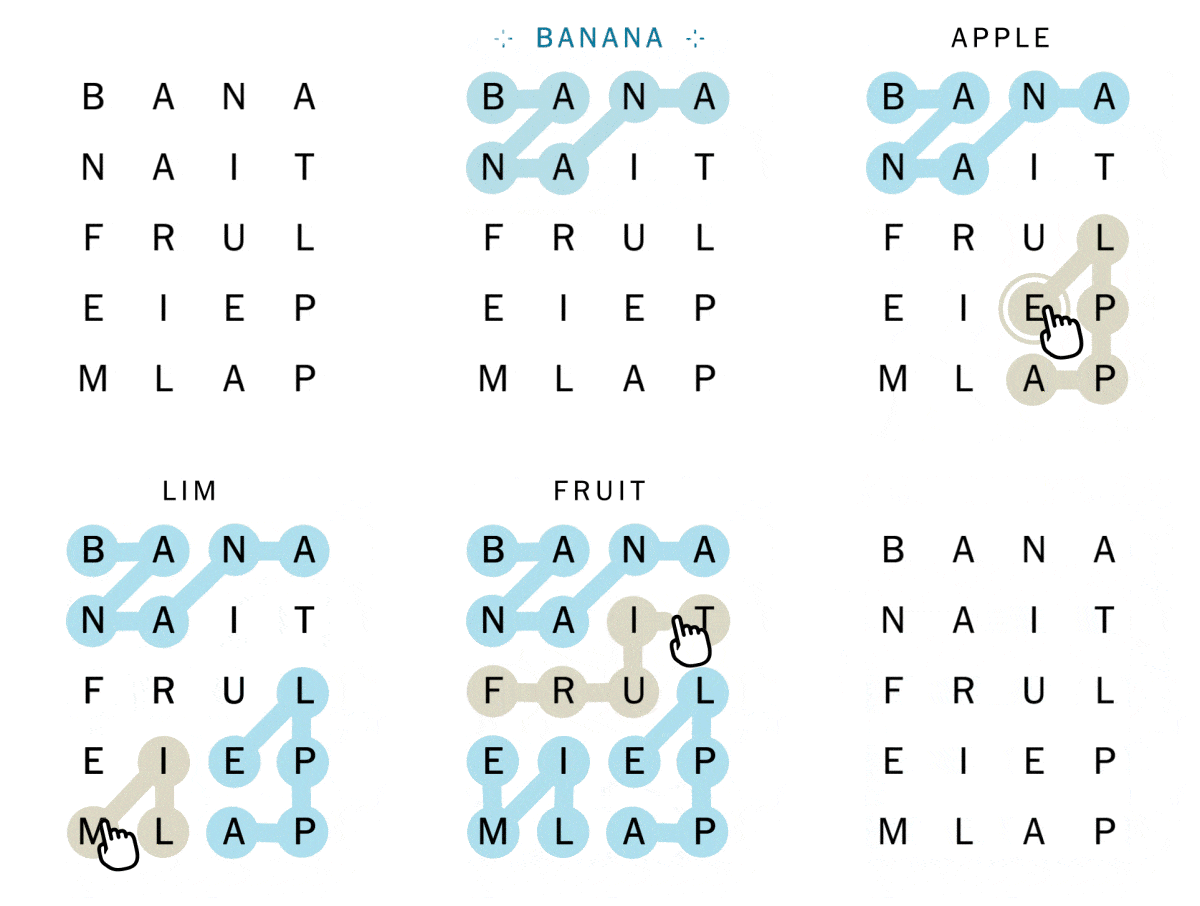
Strands is an interesting 6x8 letter grid game which contains a theme. You start by finding words relevant to the theme. These are called theme words. There is one word that stretches across the board and connects everything together. This is called the Spangram.
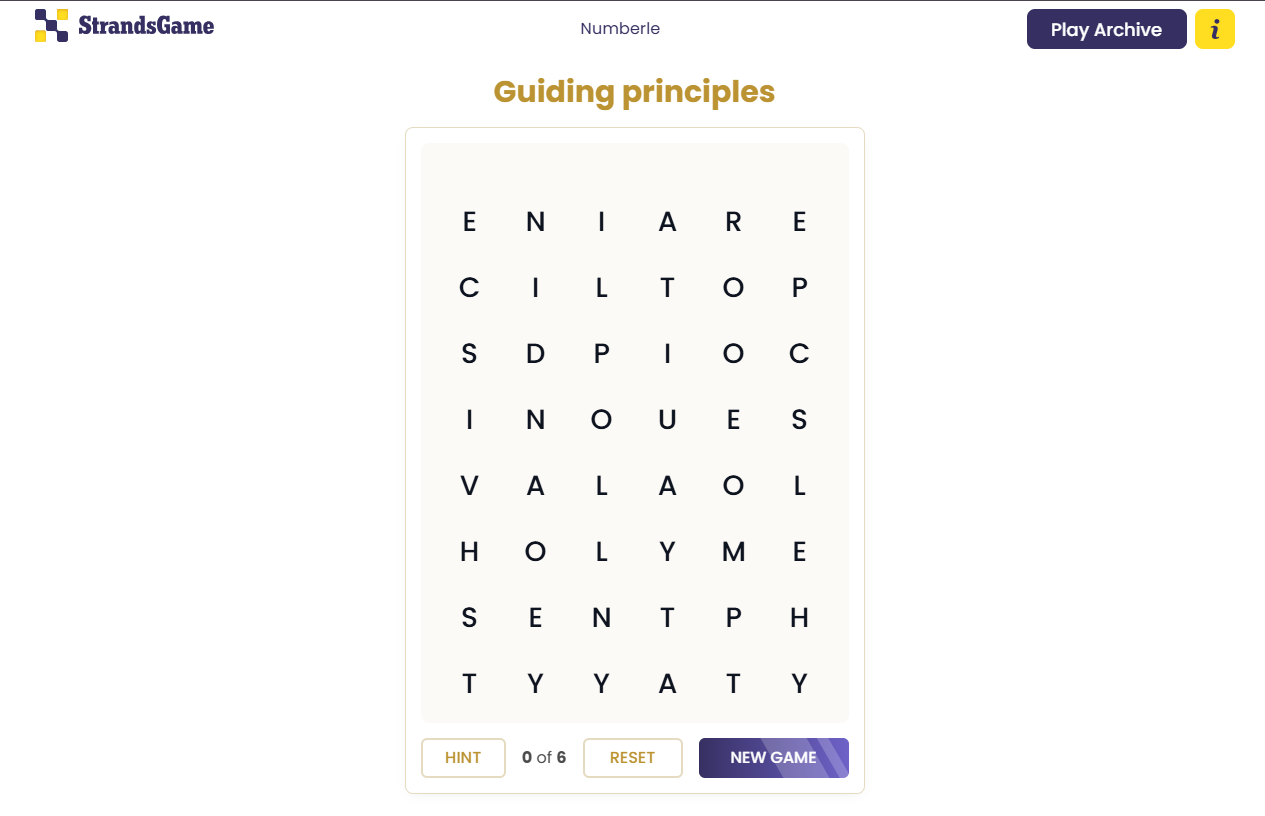
This game is interesting for individuals who love to find relationships between words. As explained earlier, you don’t normally just find a word. You connect the letters that form a word which relates to the theme.
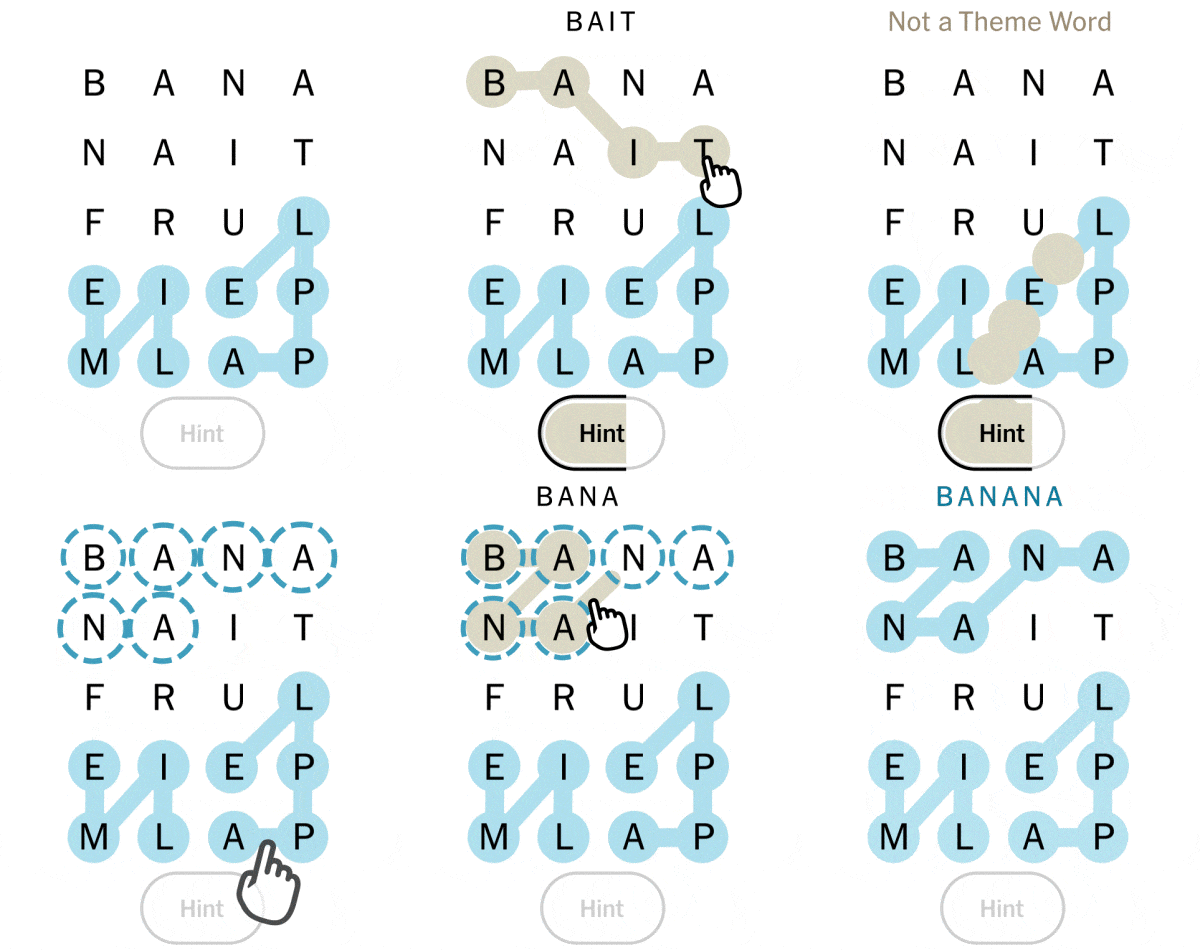
However, when you find a random word, it increases the hint bar. When you get 3 hints, the hint bar fills.
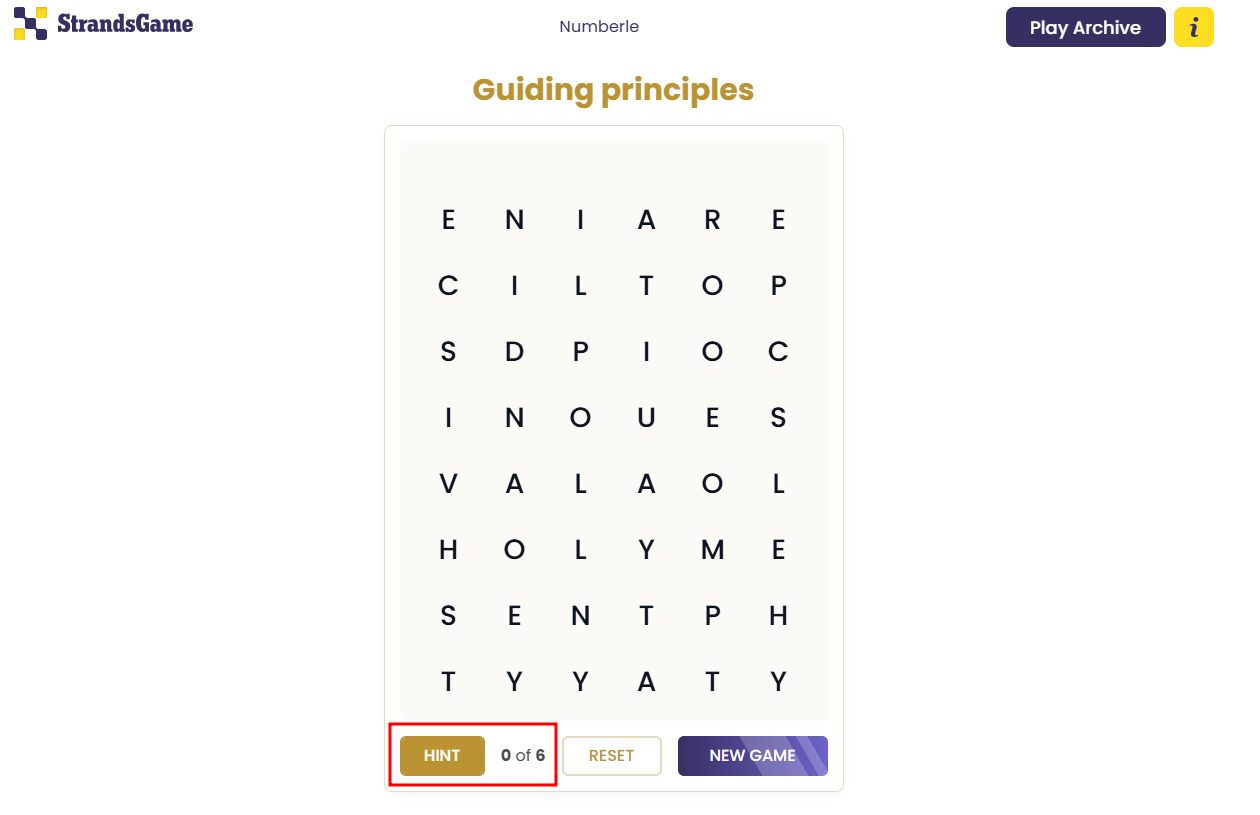
You can click the hint bar to get the encircled letters of the theme words.
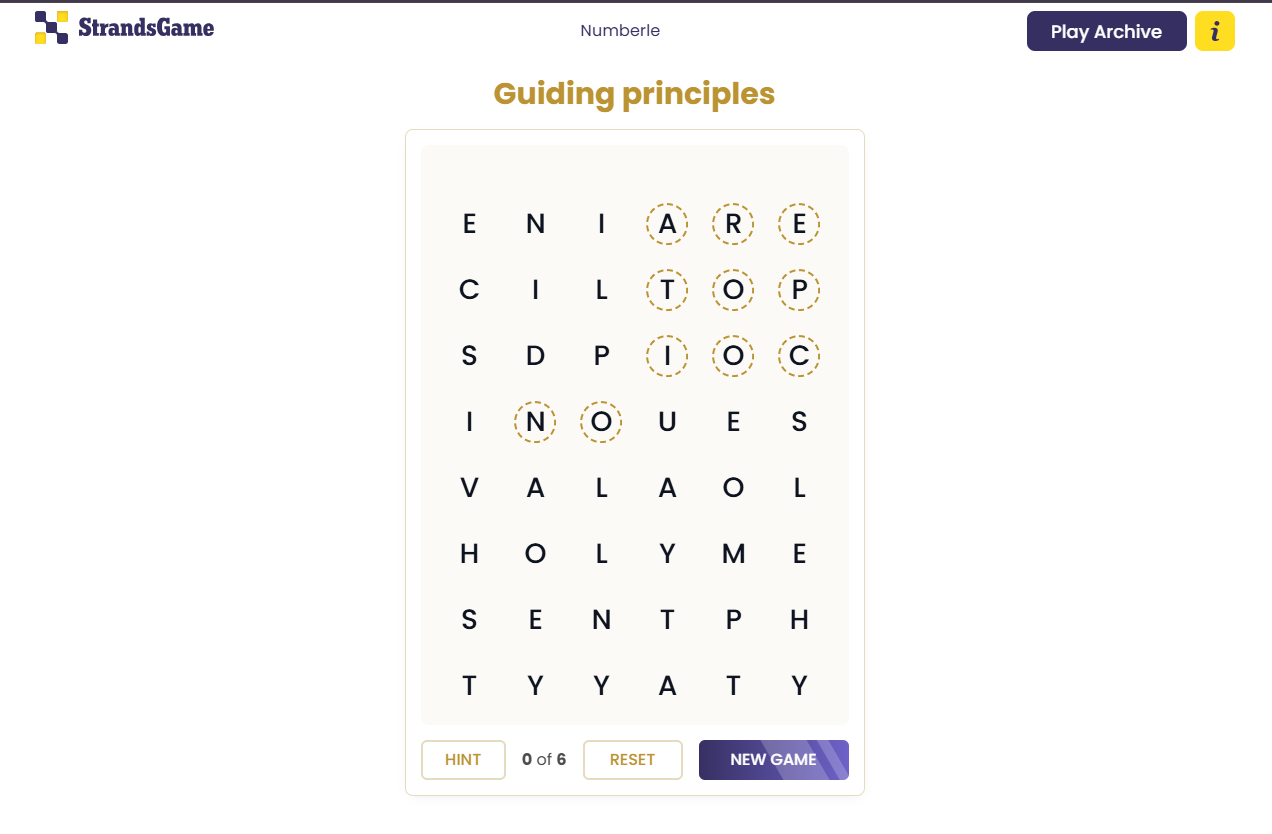
In the above image, you can see the encircled letters. Connect these letters with each other to make a proper word.
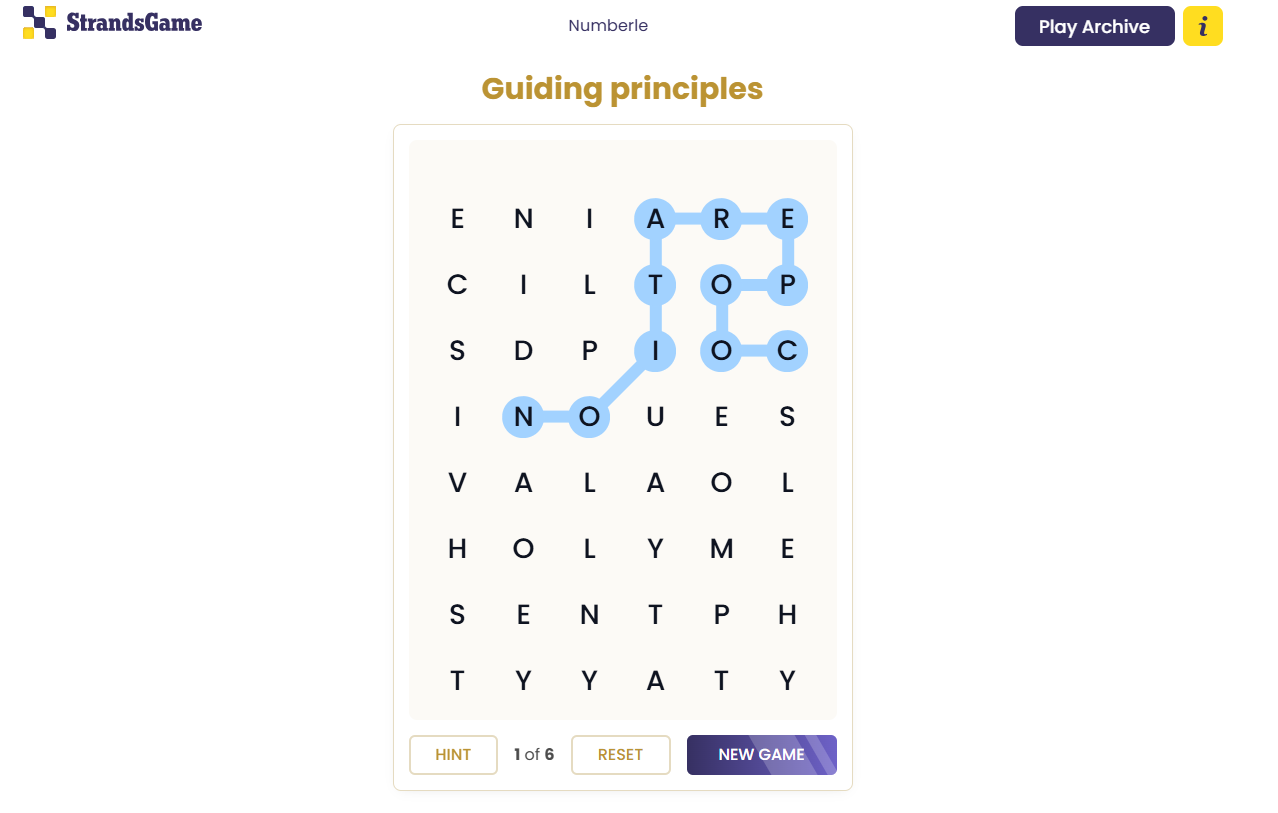
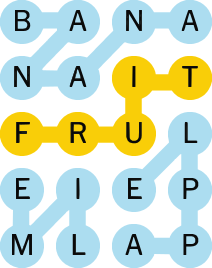
After you connect all the letters, the final word left will be the Spangram. This will be highlighted in yellow.
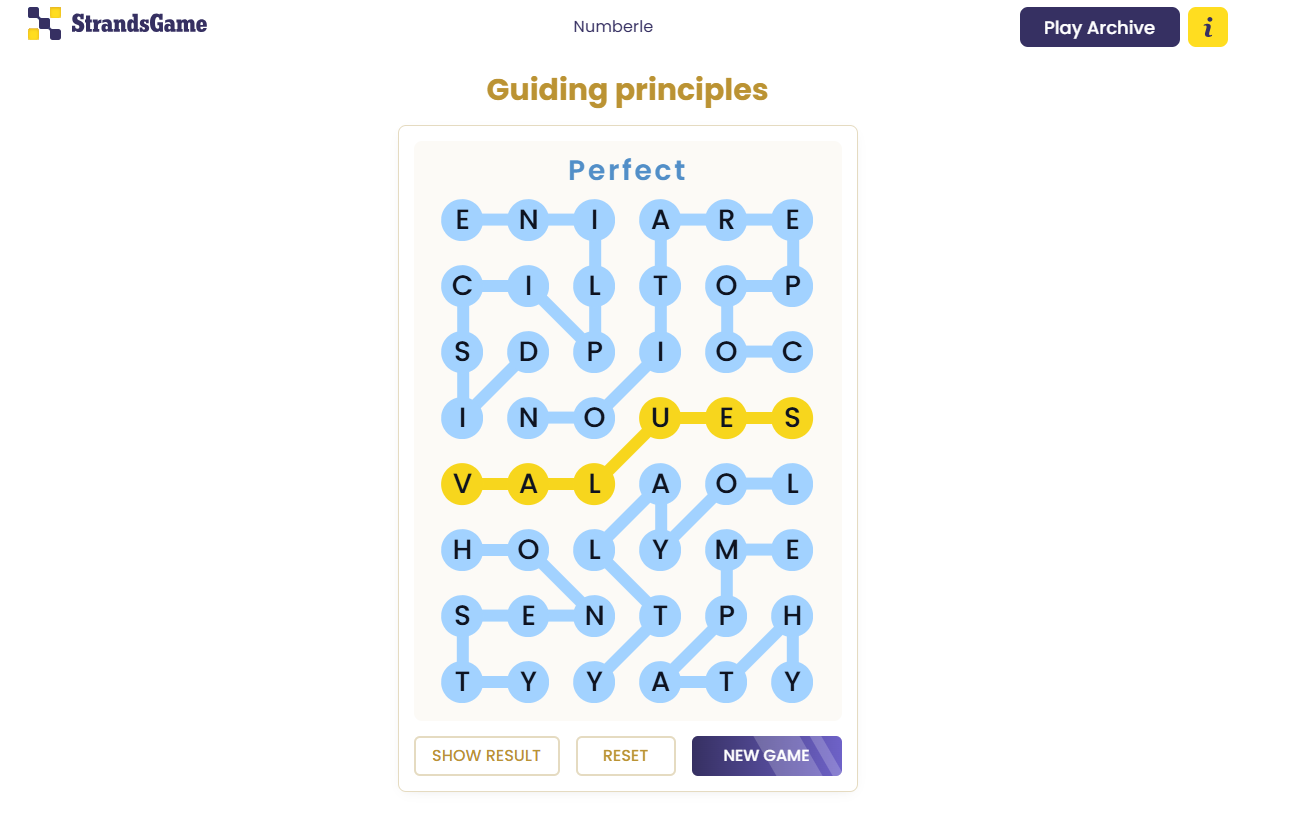
Strands game encourages your brain to move beyond finding obvious answers. As you can see in the pictures, the connection is not visible initially. When you play Strands, you practice pattern recognition, vocabulary, problem solving and conceptual thinking.
Thus, you gradually start recognizing these patterns.
Strands is really helpful as you learn to look at information from different perspectives. A group of letters may look meaningless at first. But once you find one word, it can help you find a clue that allows you to find various other words.
Numberle
Numberle combines numbers and equations. Players have to find a hidden mathematical equation using clues from previous attempts. You use different numbers and arithmetic signs to ensure the equation is equal on both sides.
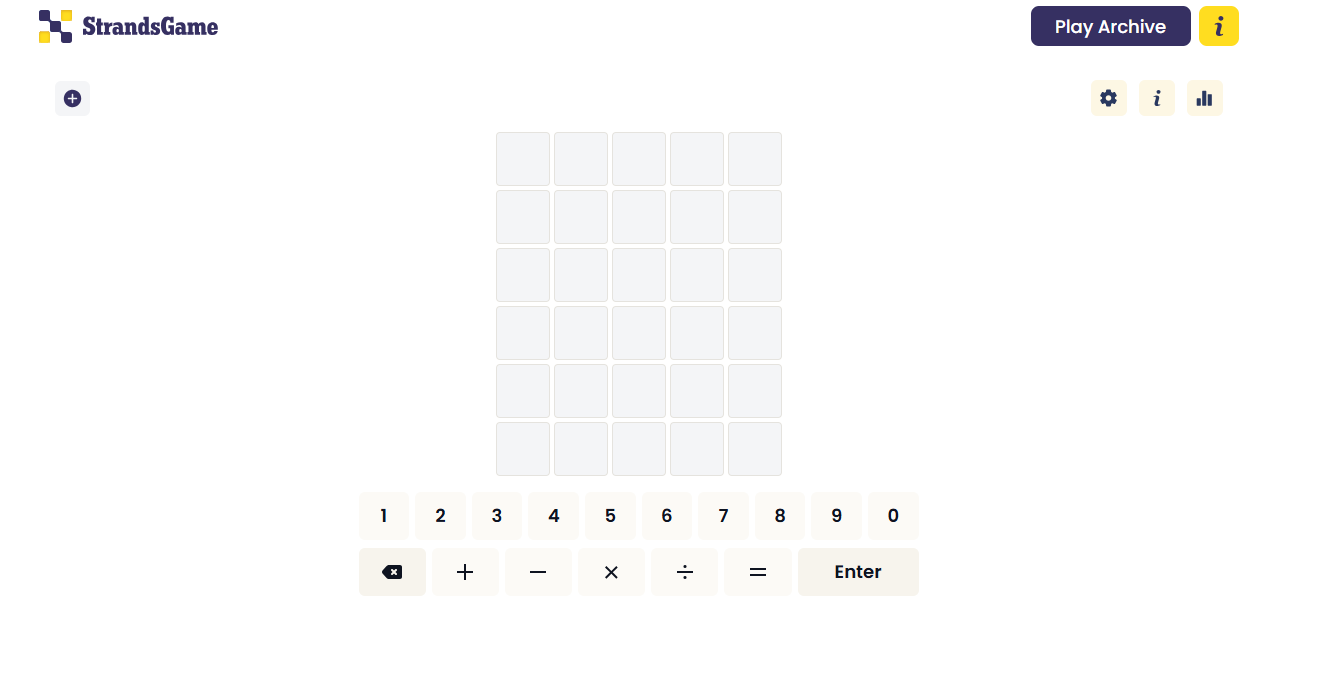
The numbers can be 0 - 9 along with signs like +, -, * and /. Numberle requires you to consider numbers, mathematical operators and the possible structure of the equation. Each attempt gives you additional information. This helps you adjust your strategy as you progress.
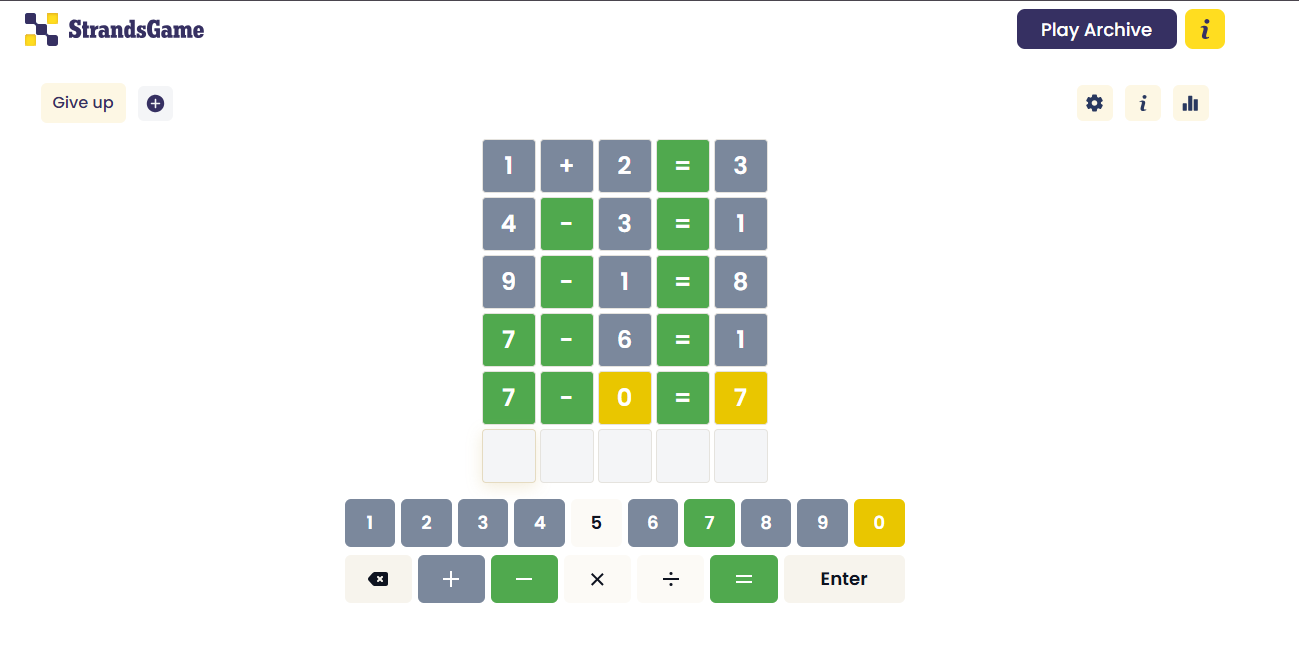
After 6 attempts, if you are not able to find the equation, then you will lose.
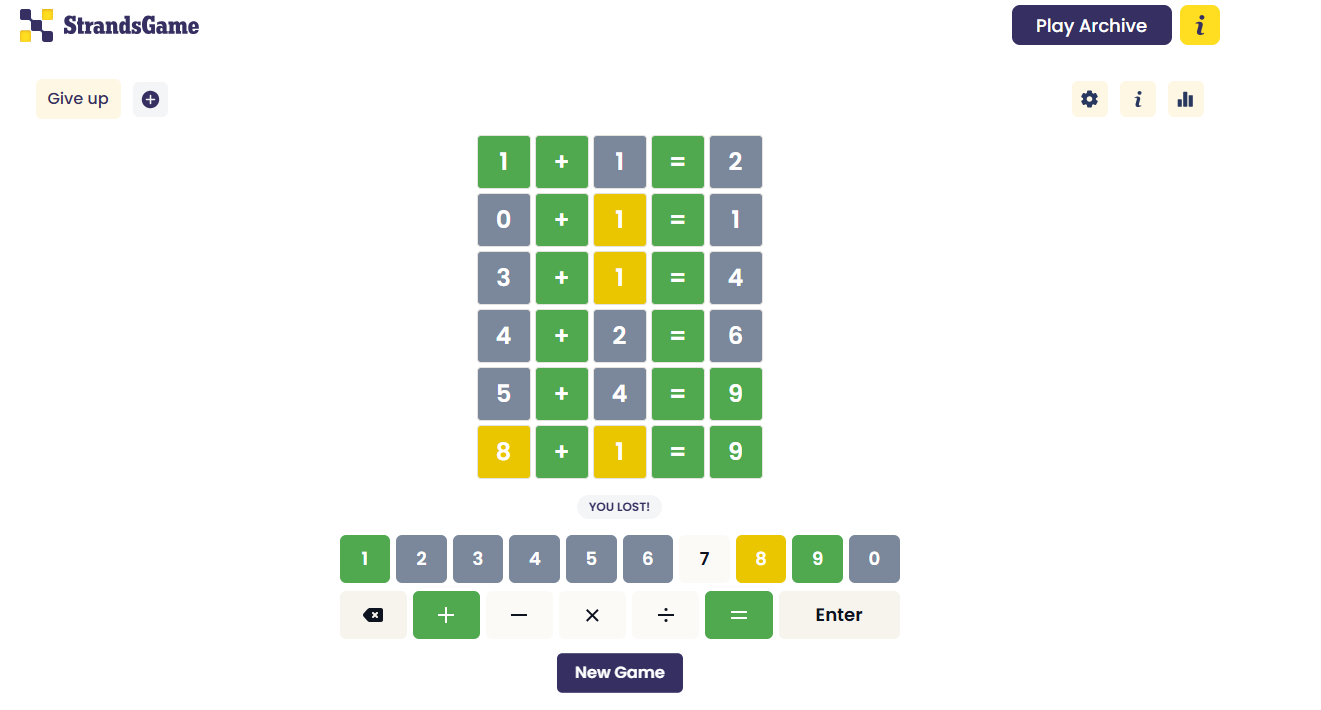
If you find the correct equation within these 6 attempts, you will win.
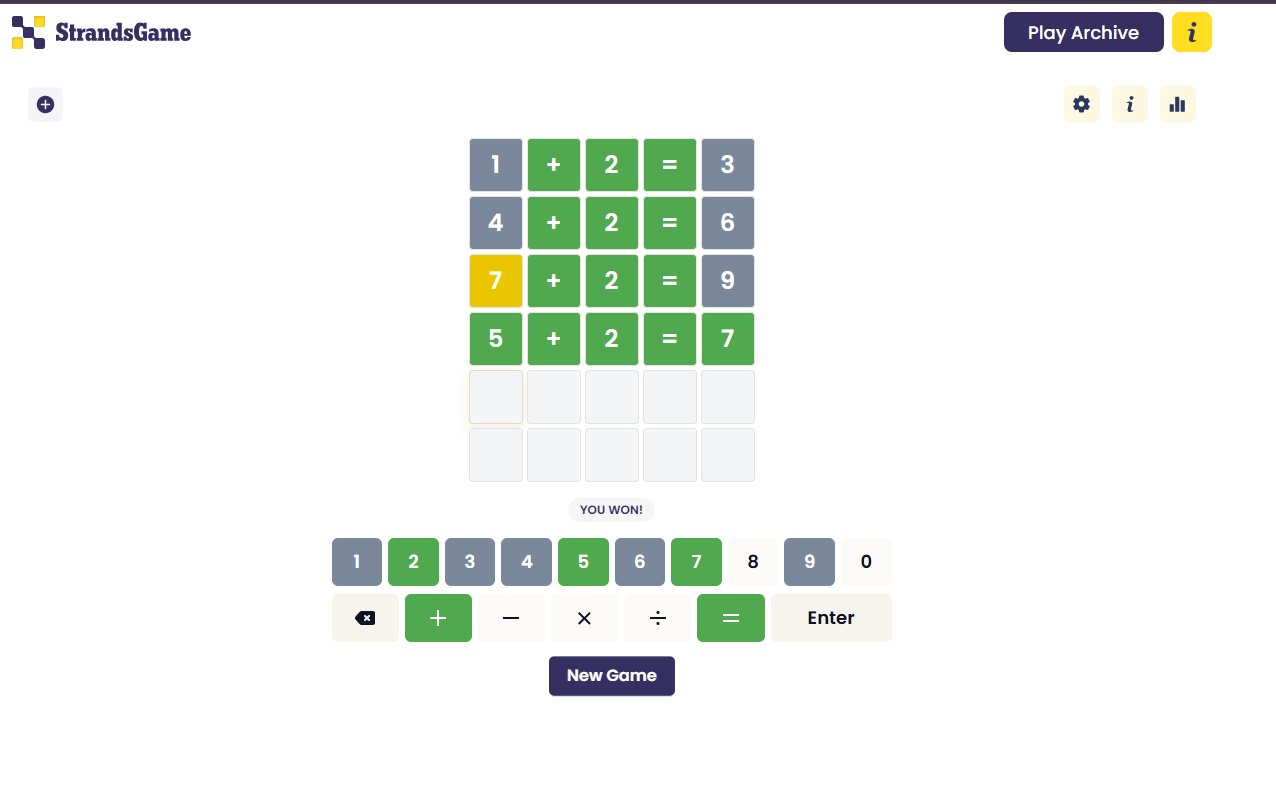
When you play Numberle, your numerical reasoning, logical deduction, pattern recognition, calculation skills and strategic thinking improve a lot.
The important thing here is that you learn from your previous attempts. You don’t treat each attempt as an entirely new guess. The possibilities narrow down as you move further.
This is the same as how we handle many problems in real life. This helps with information gathering, eliminating unlikely options and working to get a reasonable conclusion.
Wordle
Wordle’s gameplay is the same as Numberle. You write letters in the spaces. You can select the “Number of Letters” from the settings. You can select from 4 - 11 letters, and these spaces will be added.
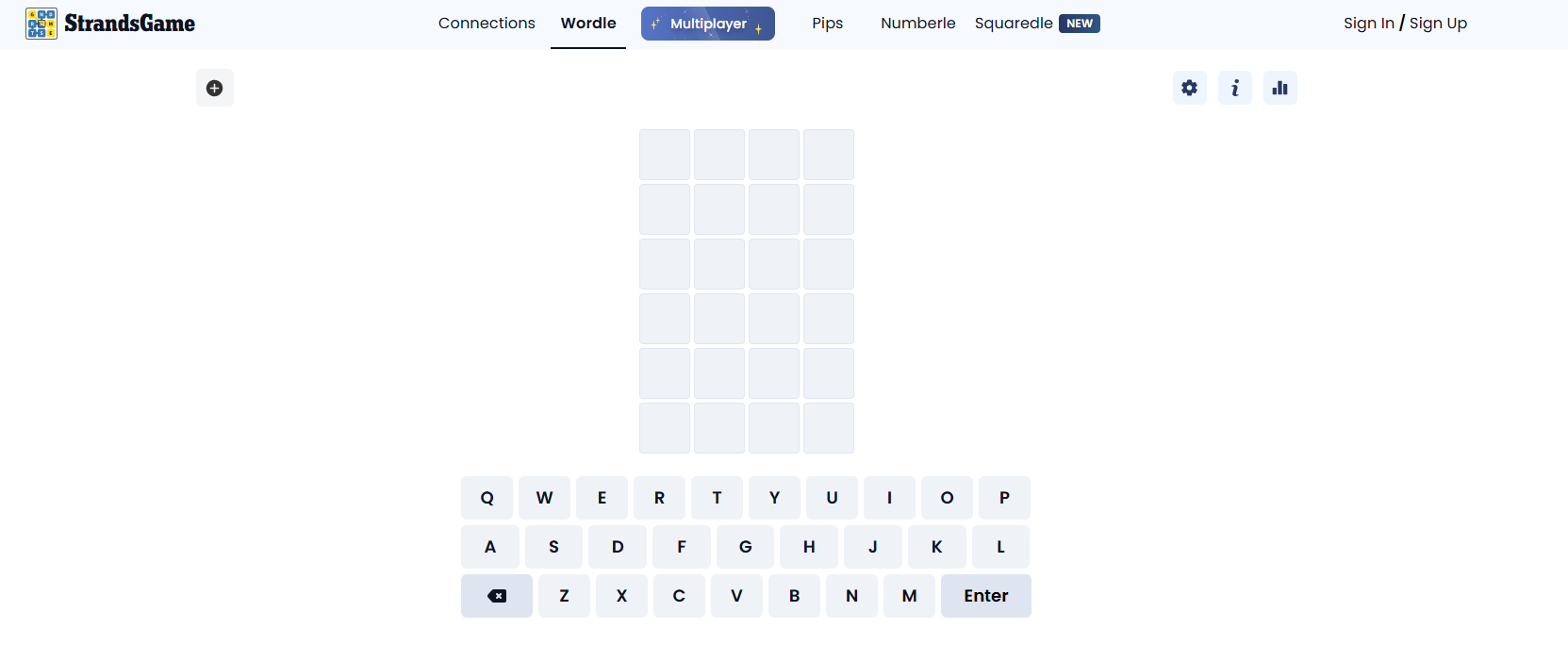
Whenever you put letters to make a word, these will be highlighted in either grey, yellow or green. These help you to find the word. Each guess provides clues about the correct letters and their positions.
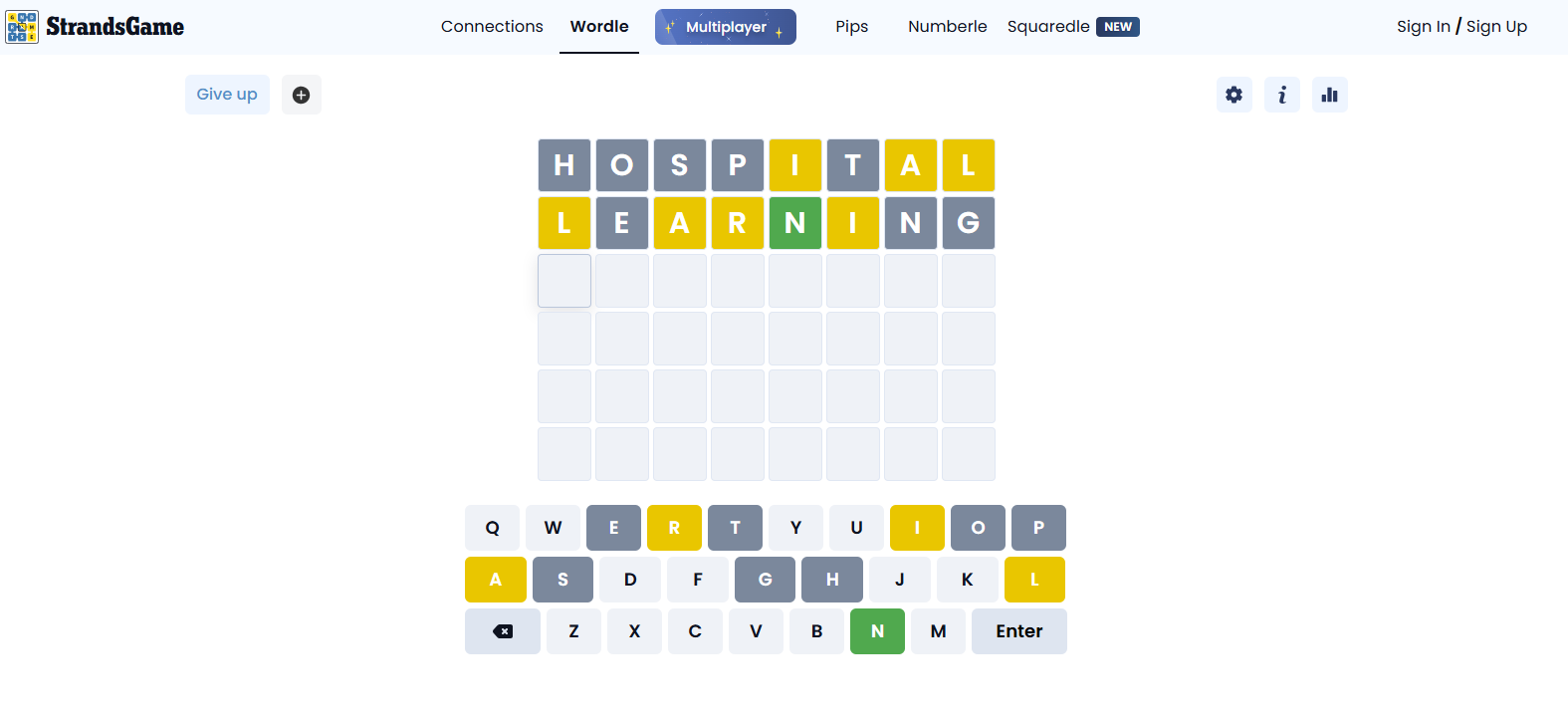
Wordle may look like a simple word game. But each guess requires a surprising amount of reasoning. You will have 6 attempts.
The player has to find the correct word. If you find it, you'll win. Make incorrect guesses. You'll lose the game.
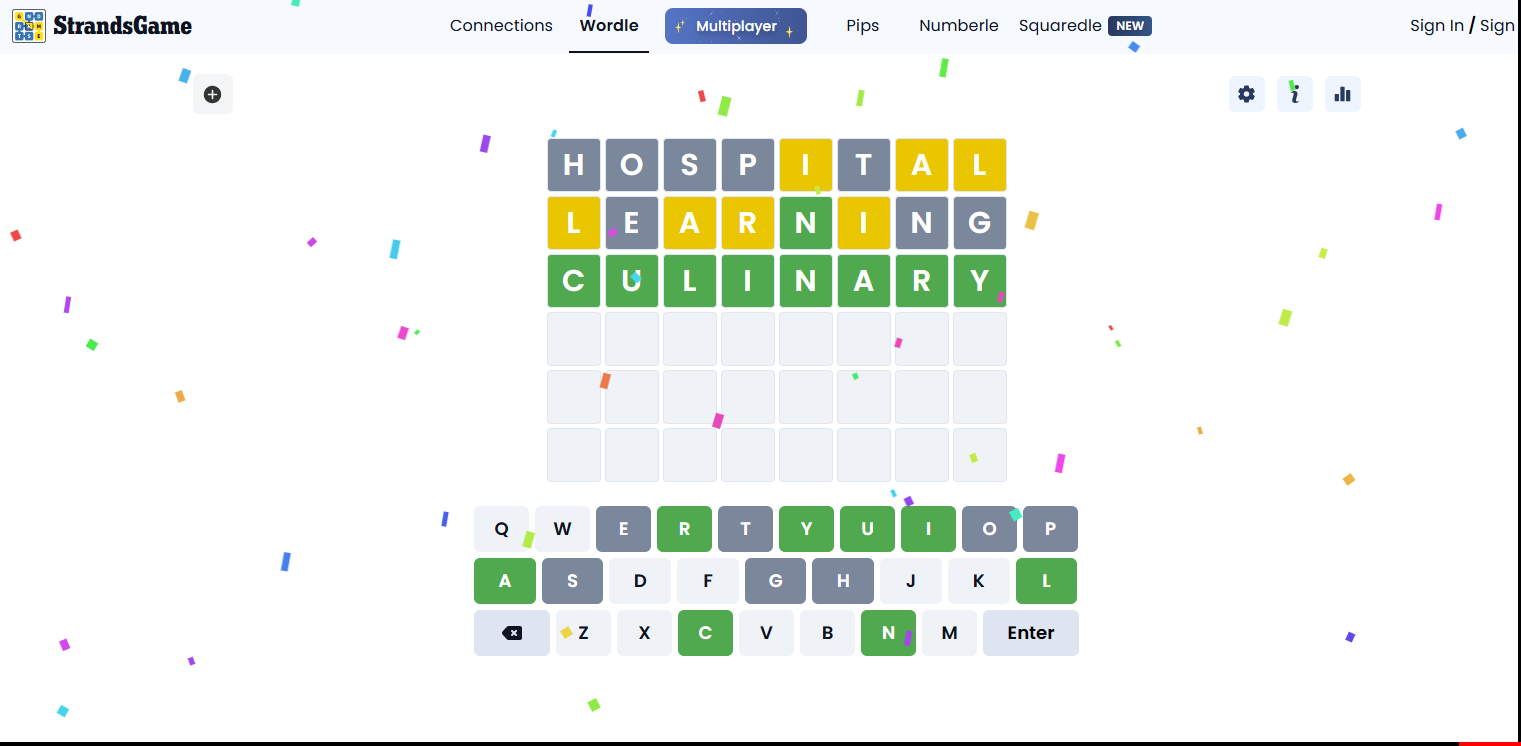
Players don't find letter placement challenging. But when it comes to decisions. They become confused about what to do with the information. Don't make random guesses. See the letters in grey and yellow. Don't use the grey letters. See the common letter patterns.
A letter in green means it is in the right place. A yellow coloured letter means it is correct but not in the right place. You need to change its placement. Depending on these clues, think about which word is most likely to fit the available clues.
Keep looking at the clues. See what colour they are. Their colour decides whether you are making the right or wrong decisions. Wordle not just improve reasoning but also problems solving skills.
Chess
Chess is another game which can improve reasoning. It is a two player strategy game. Players play it on an 8×8 board with 32 pieces,16 for each player.
Players have to checkmate the opponent’s king. If we describe it in simple words, if your king is under attack and there’s no place to escape. This means the opponent wins the game.
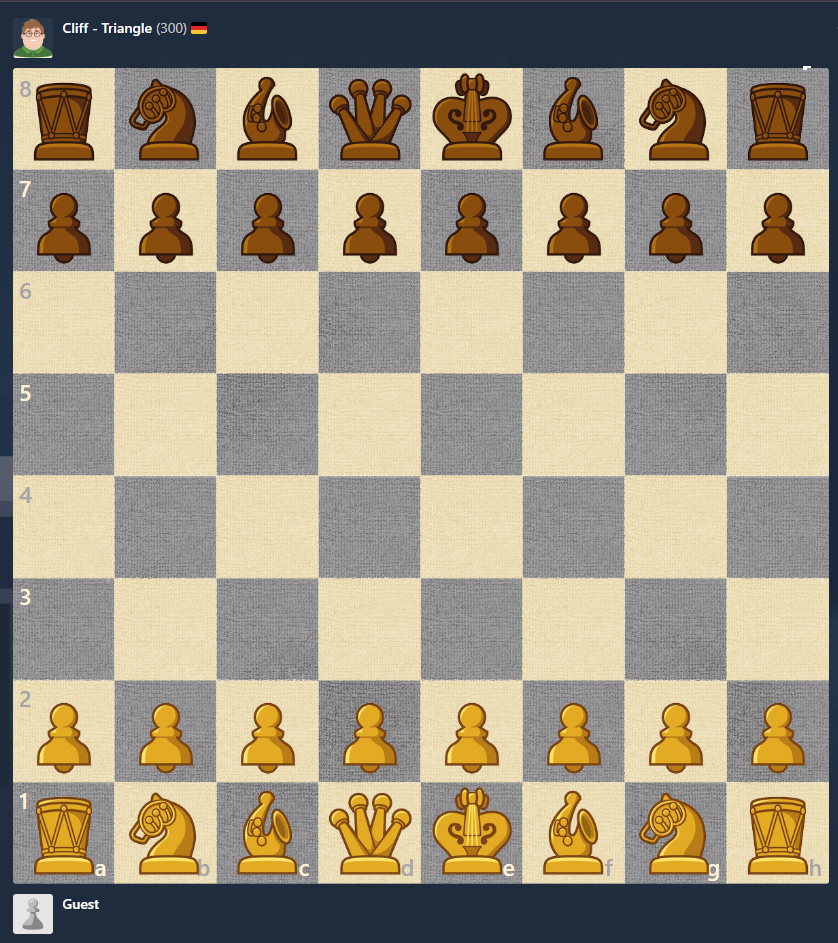
Chess pieces include the King, Queen, Rook, Bishop, Knight and Pawn.
Light moves first and players take turns. Move into the opponent's square to capture the piece. Remember moving into opponent's square means the opponent can attack you as well.
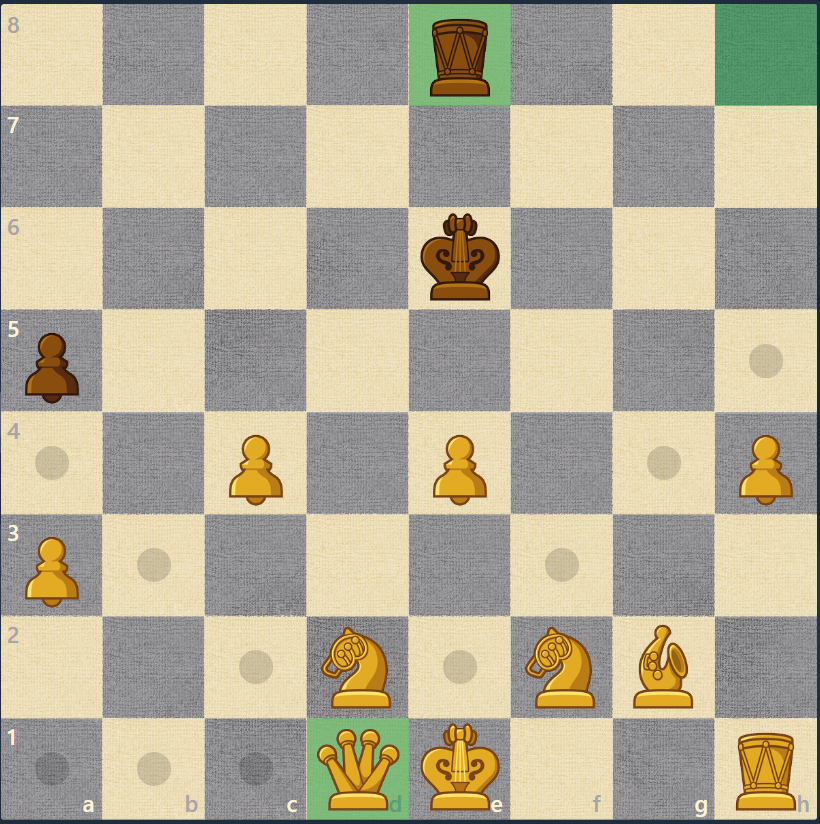
A good player tries to control the center and move the pieces gradually. Also, protect your king and look several moves ahead.
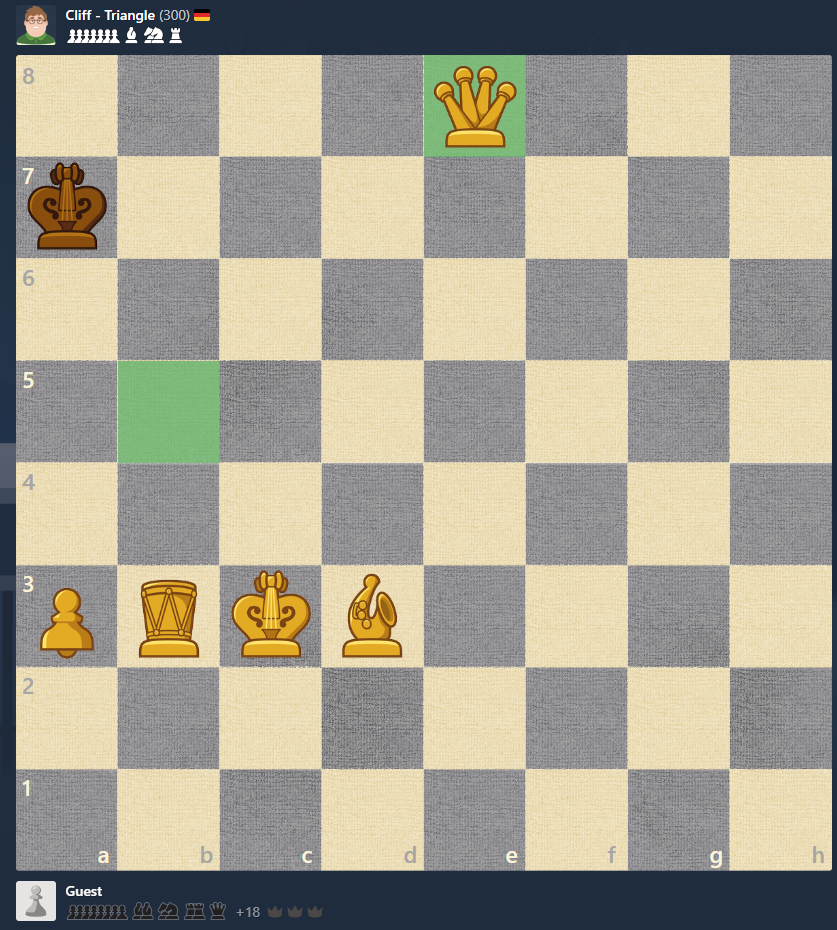
Chess involves strategy, tactics, calculation and planning. Sometimes sacrificing a piece can actually lead to a winning position.
Playing chess strengthens the brain's prefrontal cortex. It also sharpens specific cognitive skills. This involves pattern recognition and logical deduction. The game allows you to hold multiple variables, potential moves and counter-strategies simultaneously.
Sudoku
Sudoku is a 9×9 grid game containing numbers 1 to 9. You need to fill the rows, columns and 3×3 sections by adding numbers.
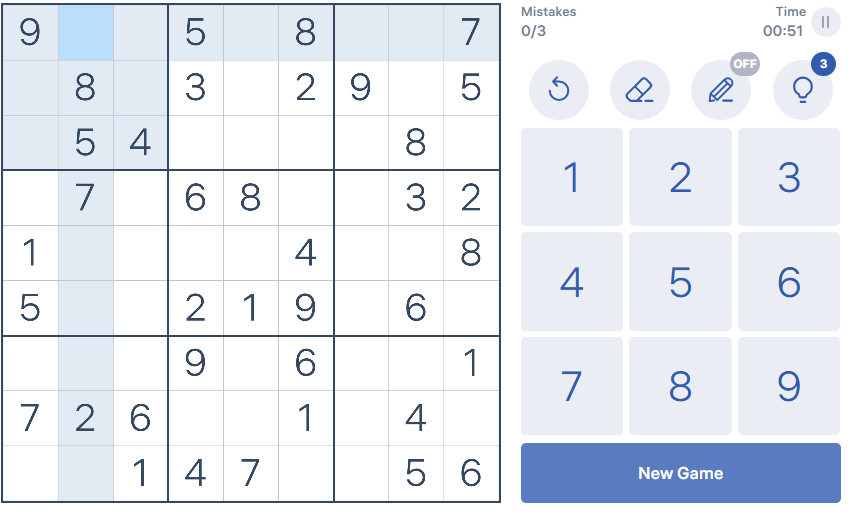
You can see that there are numbers in the squares of the grid. Thoroughly analyze these numbers. Players have to add missing digits logically to complete the game.
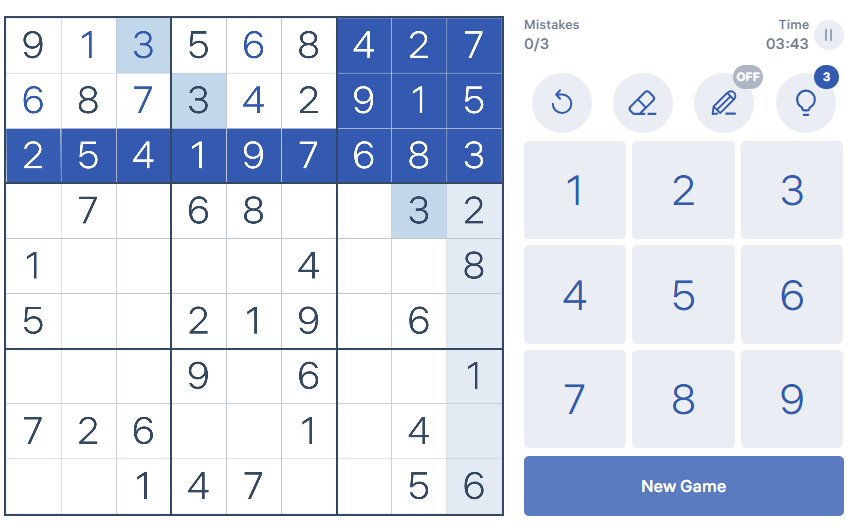
In case a row, column or 3×3 grid contains more than one number from 1 to 9. This move will be considered incorrect. It will count as your mistake.
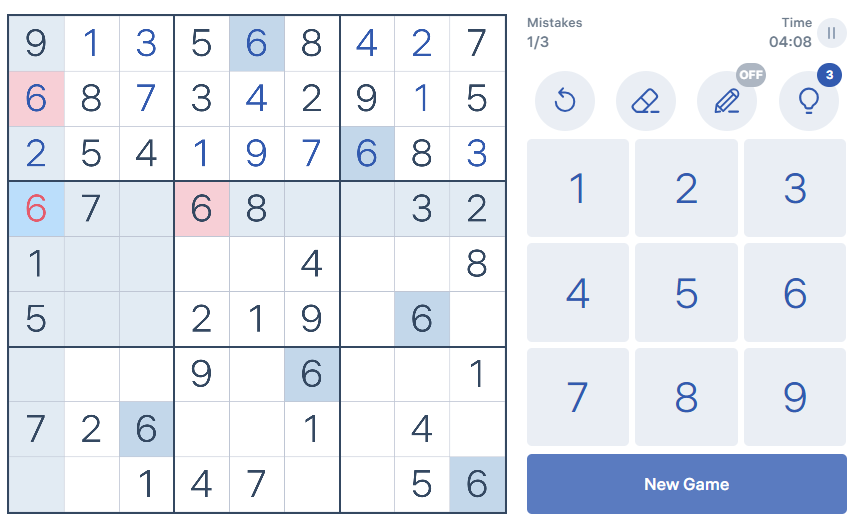
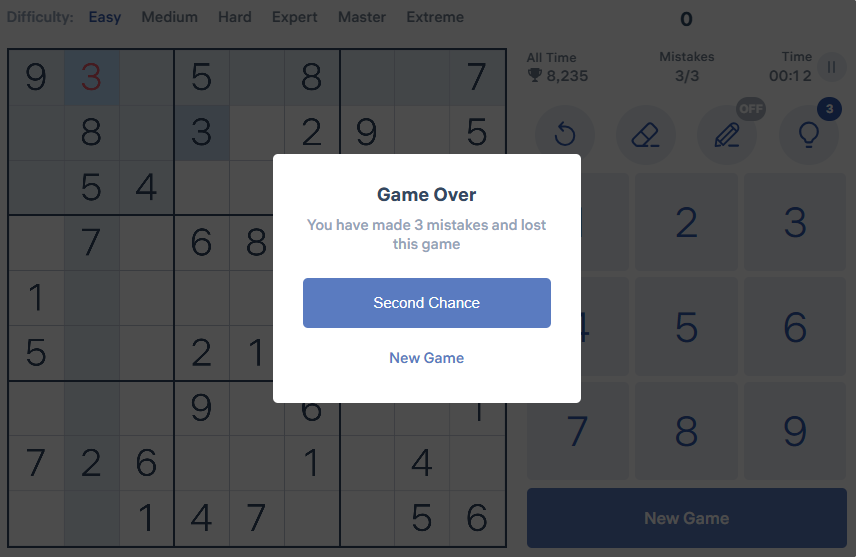
While playing, if you add an incorrect number. The number will be highlighted in red. This will count as your mistake. If you make more than 3 mistakes. You will lose the game. You can either get a second chance or start a new game.
To play and win this game, players have to test multiple possibilities. They also need to test and systematically rule out numbers that do not fit.
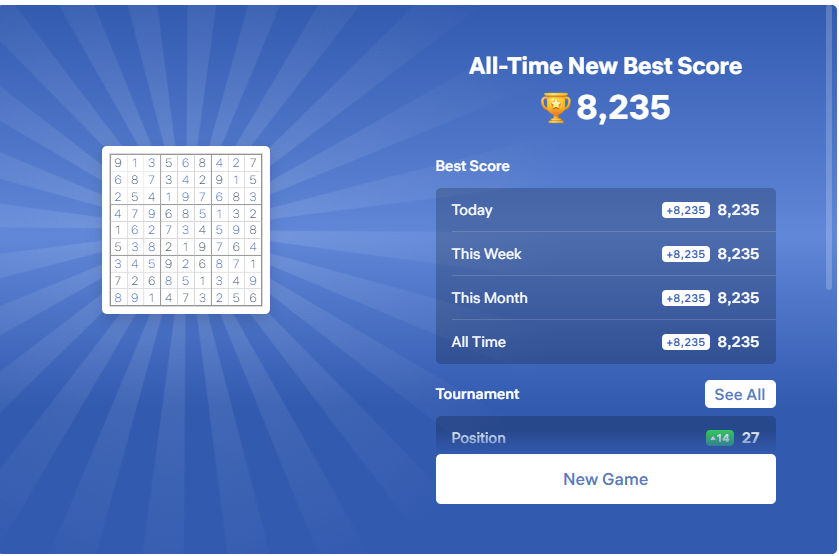
Sudoku trains your brain to apply strict rules and also improves your analysis. This game helps with pattern recognition, as you have to analyze the place of each number and make your move depending on those numbers.
As there are chances of elimination, besides testing on the grid, you try to adjust numbers by just looking at the games just so you can know which digit would be accurate for that position.
Pips
Pips is an interesting game that challenges your spatial and mathematical reasoning skills. It consists of a grid containing different shapes, numbers and colored areas. Players need to place the domino pieces on the board.
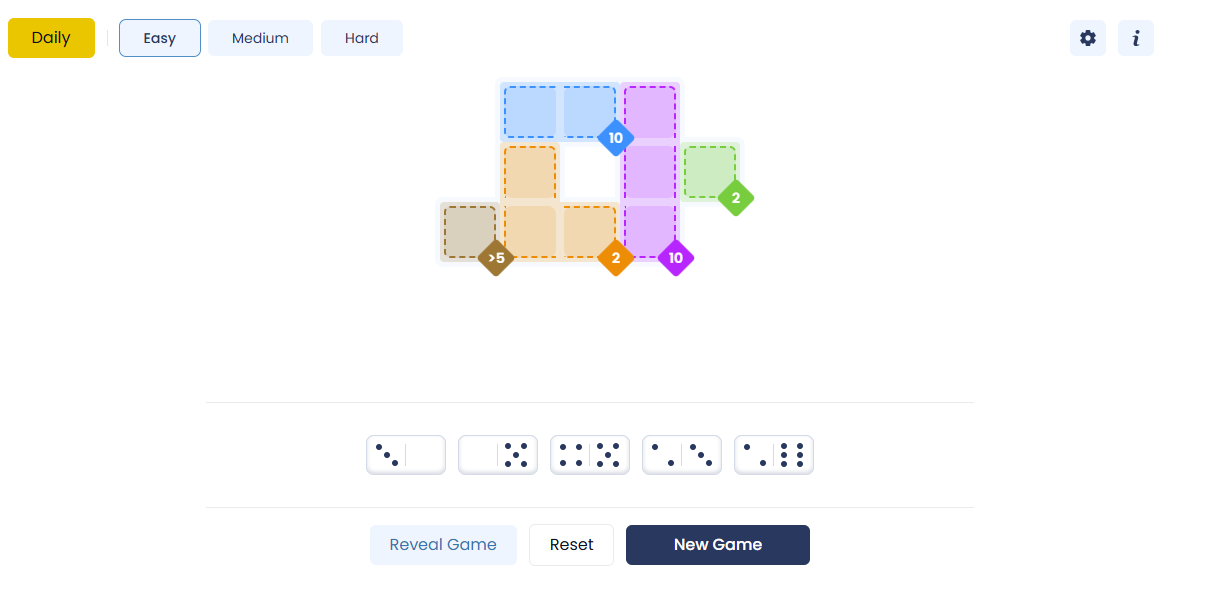
Before starting the game, carefully analyze the board. You need to find out the appropriate spaces where you can place the piece.
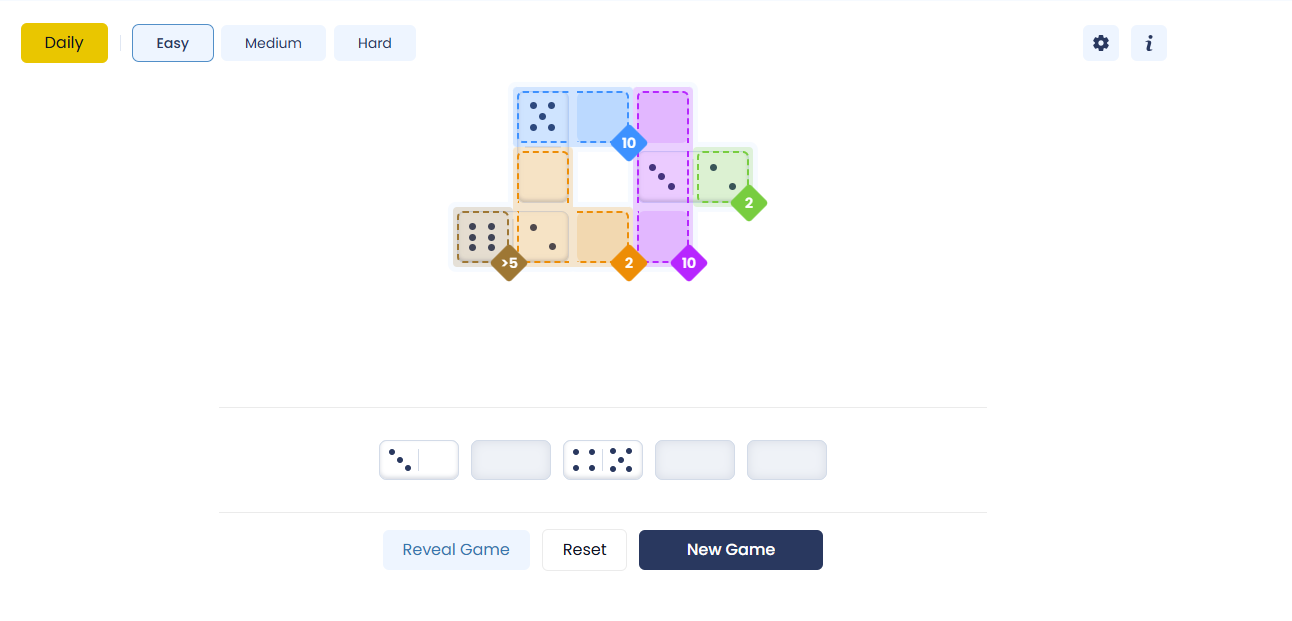
You can rotate the domino in any direction depending on the requirements of the space. You can rotate it in any direction and place it where you find it appropriate.
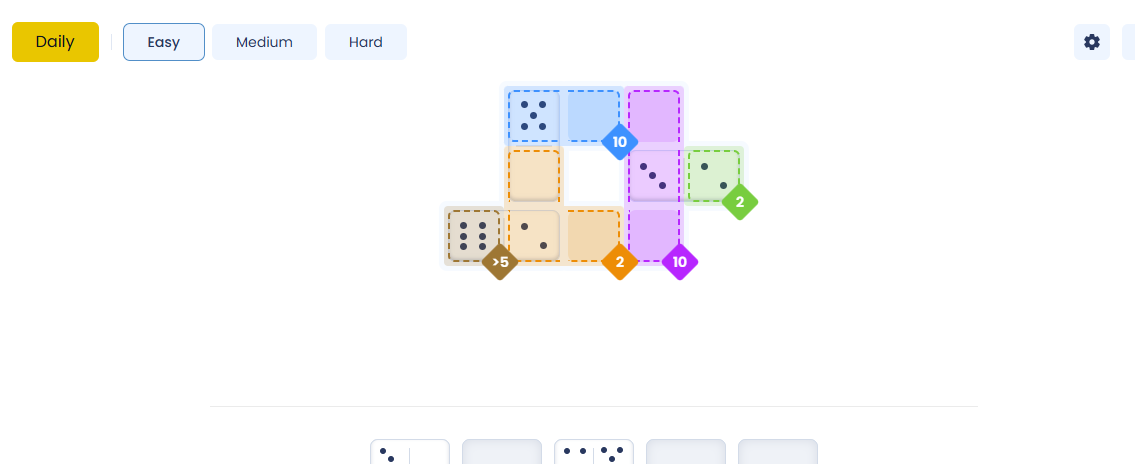
When you put all the pieces in the correct place, you will win the game.
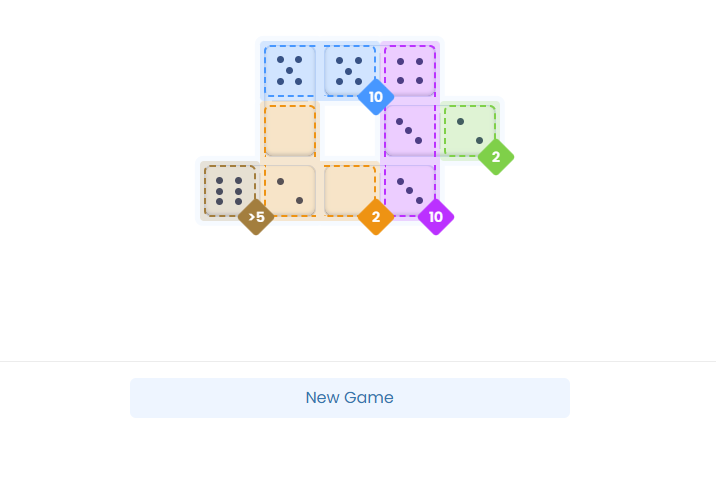
Pips game helps your brain to think beyond the answers. This game requires you to place the pieces based on your assumptions. The correct placement is not immediately visible so you need to think logically to minimize the chances of incorrect possibilities.
When you play Pips, you practice pattern recognition. It also helps with logical thinking and problem solving. You look at information from different perspectives because of this game.
Final Words
Reasoning improvement shouldn’t feel like studying. Games such as Strands, Numberle, Wordle, Chess, Sudoku and Pips are different ways to challenge your brain. Playing such games will improve your reasoning while also enjoying the process.
The key is consistency. Make a few minutes of puzzle-solving part of your routine. Challenge yourself with different types of games. Also focus on the thinking process rather than simply getting the right answer.
After all, every puzzle is an opportunity to practice thinking more clearly, spotting patterns faster, and making better decisions.
FAQs
Is gaming linked with IQ?
Yes. Gaming is linked with IQ. It improves cognitive skills and intelligence in individuals. However, not every game can improve IQ. Games in which players need to analyze thoroughly improve the IQ of a person.
Games like Strands, Numberle, chess etc can greatly help in improving a person's IQ. When you play a game. You are improving your reasoning in a fun way.
How to train your brain to be more logical?
To train your brain to be logical, you need to stop guessing. Solve puzzles, play reasoning games and practice analyzing problems. Games like Sudoku, Chess, Strands and Numberle help develop logical thinking. These games also help with pattern recognition and problem-solving skills.
What are the best games for older adults?
Sudoku, Wordle, Numberle, Strands, Chess, and Pips are good choices. They are easy to play while encouraging memory, logical thinking, pattern recognition, and problem-solving.
Why is playing Wordle and Numberle beneficial?
Wordle improves vocabulary, pattern recognition, and deduction, while Numberle develops numerical reasoning, calculation, and logical thinking. Both encourage players to learn from previous attempts and eliminate incorrect possibilities.