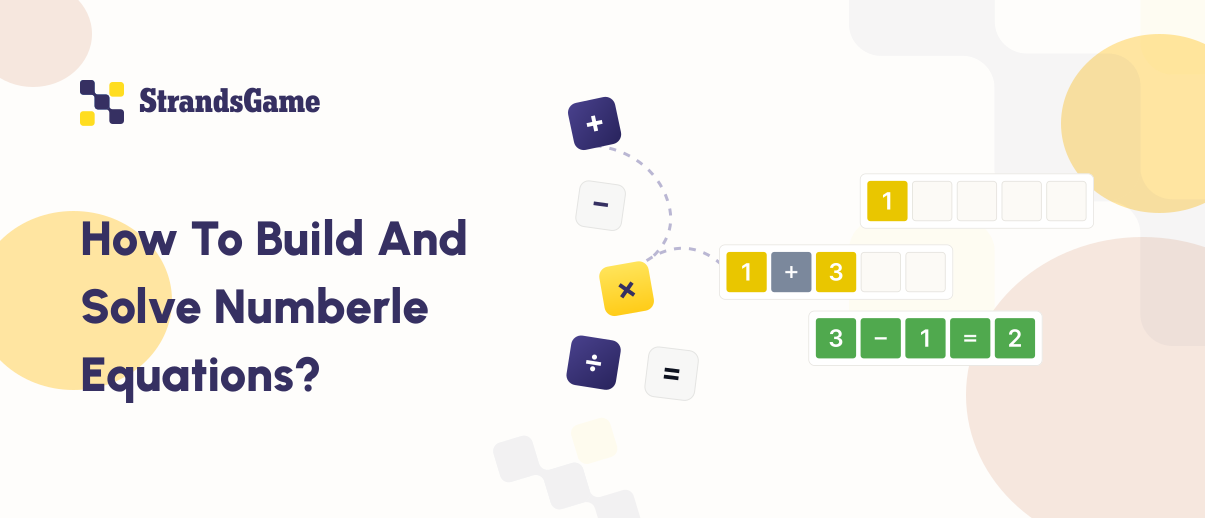
Numberle is a math based puzzle game. It challenges you to create a correct equation using numbers and mathematical symbols. Like Wordle, Numberle gives you a limited number of spaces.
But here you aren’t guessing a word; you are finding an equation that satisfies the puzzle’s rules. Depending on the puzzle, the equation can contain different numbers or characters, usually combining digits and an equals sign.
Understanding the Numberle Equation
The first step to solving Numberle is understanding how many spaces are available. You can choose 5 to 12 spaces and arithmetic signs. You need to put digits or mathematical symbols as per your equation. The arithmetic signs include addition (+), subtraction (-), multiplication (× or *), and division (÷ or /). While the equals sign (=) separates the calculation from its result.
Let's give you an example. A simple equation could be 1 + 2 = 3. Here, the numbers and symbols together occupy a row or specific spaces. Longer puzzles may require more digits or a more complex calculation.
How to Choose the Equation Length and Signs in Numberle?
Before you start playing Numberle, you can either stick with the original spaces which are 5 or you can choose it on your own. If the simple game is now boring for you and you want to add more numbers and equations, then you need to follow some instructions.
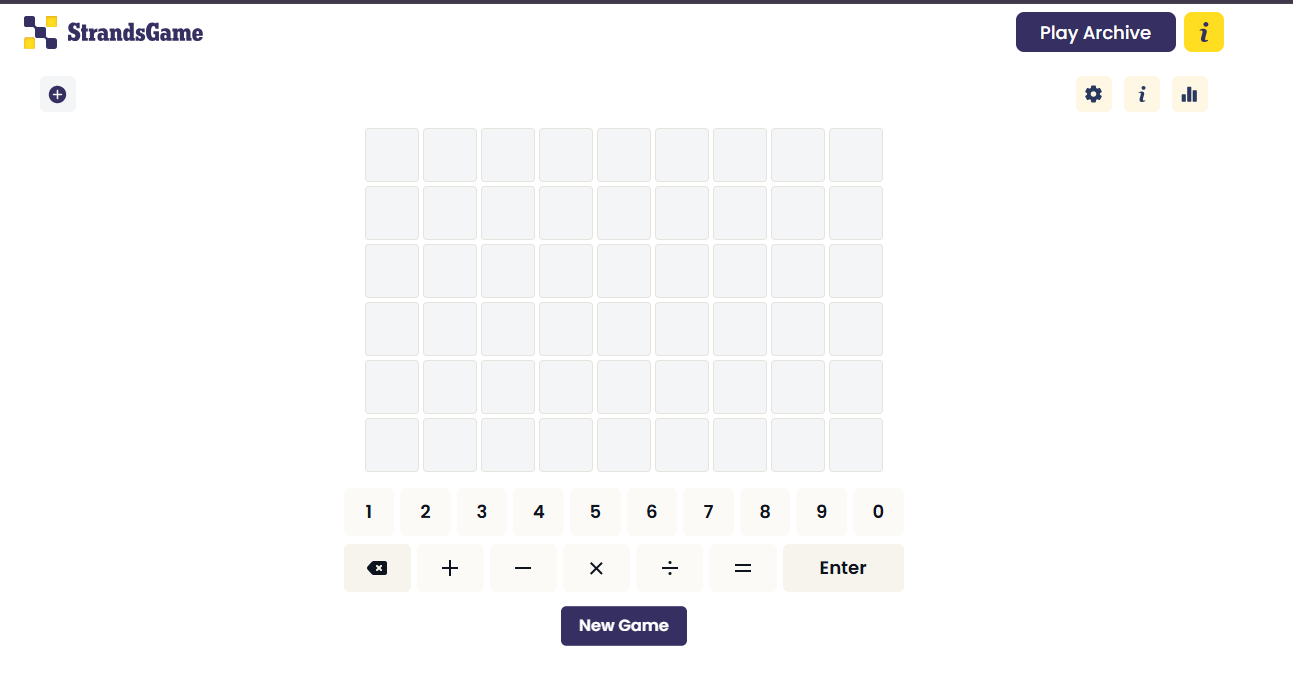
Open the game first. You will see the following interface.
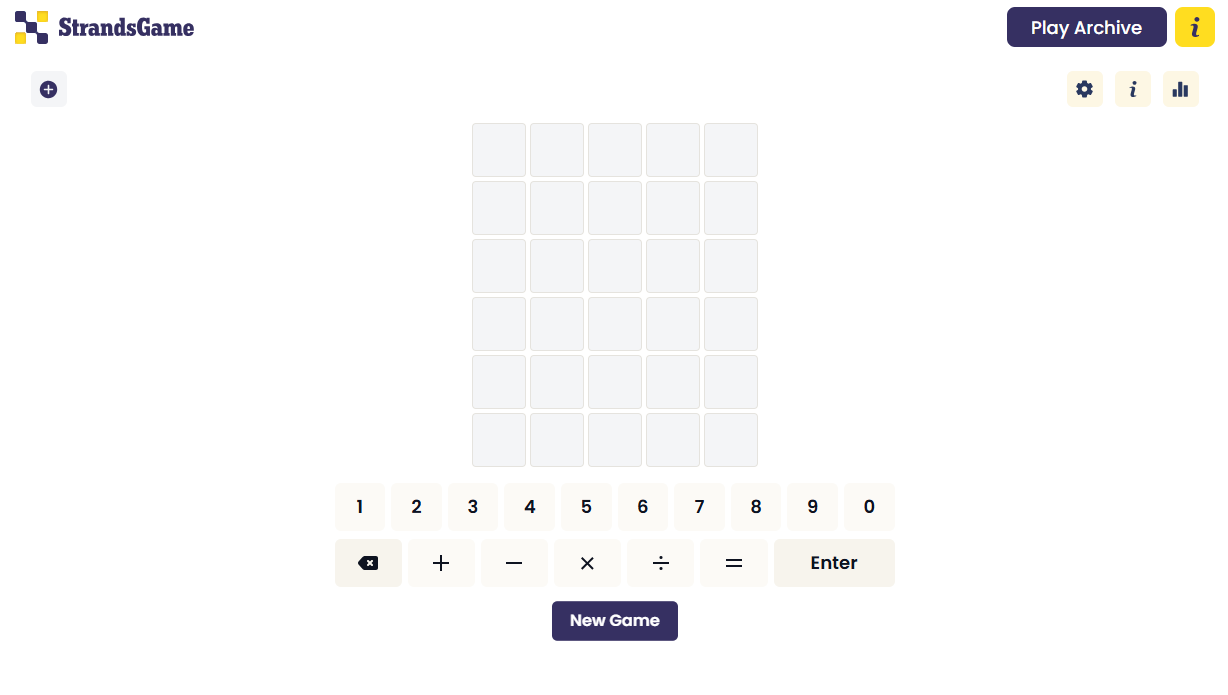
On the top right, there's a settings button. Click on that button.
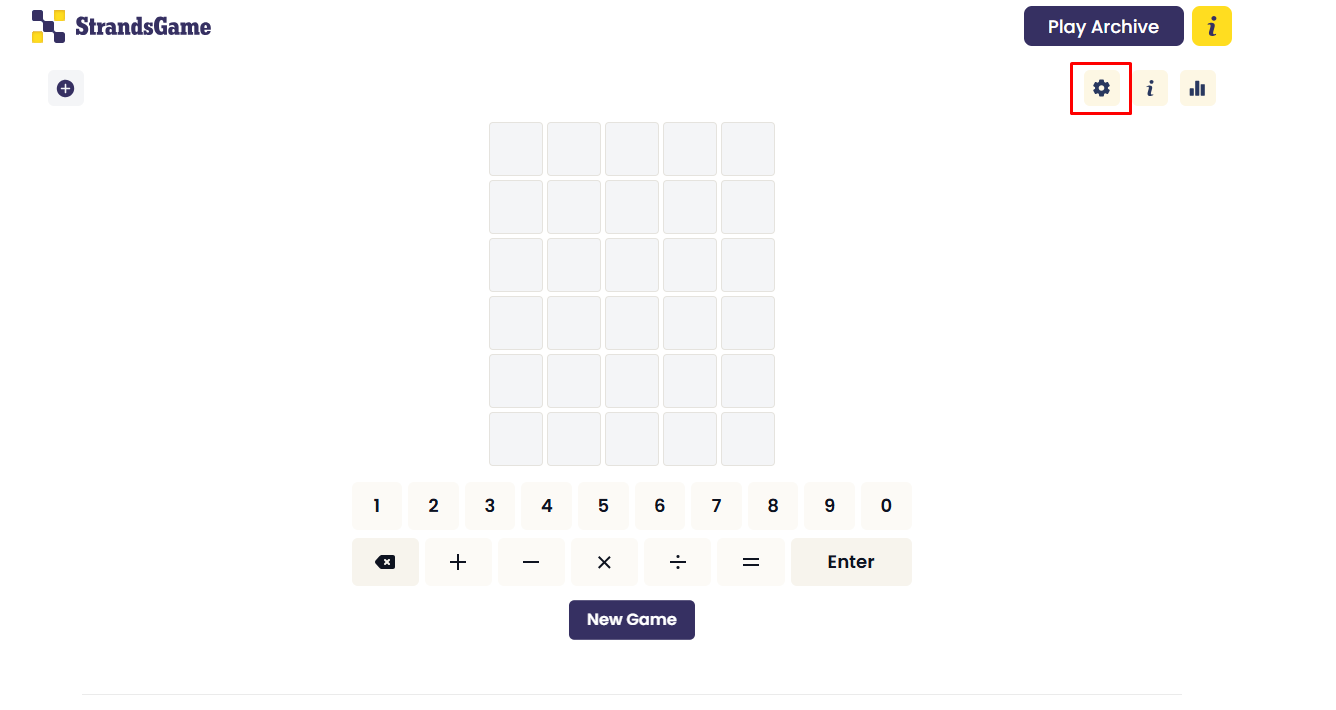
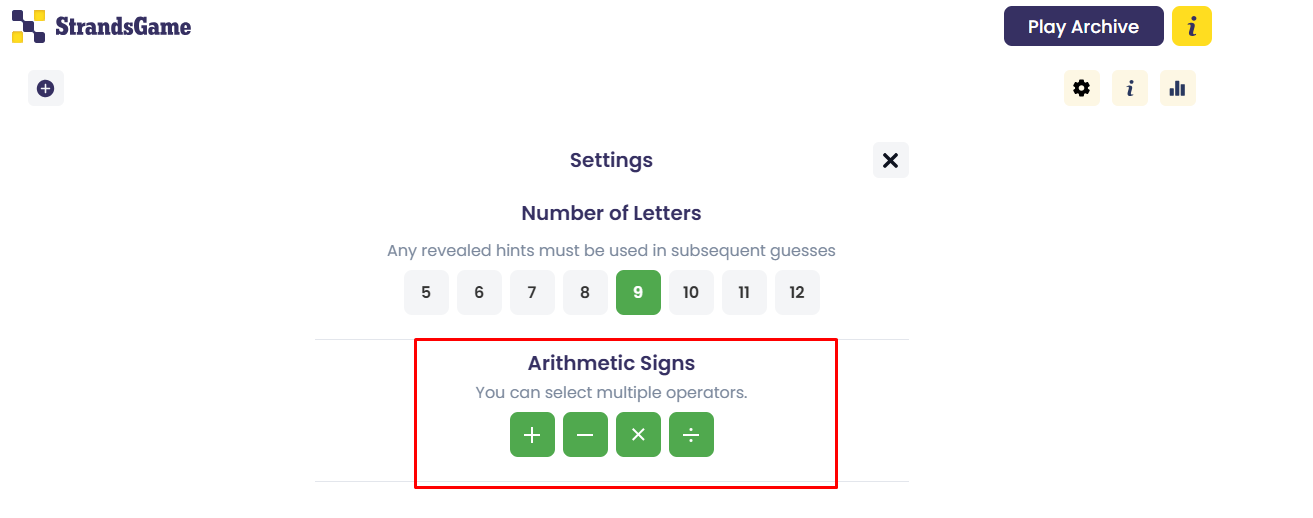
When you click on the button, you will see the following interface:
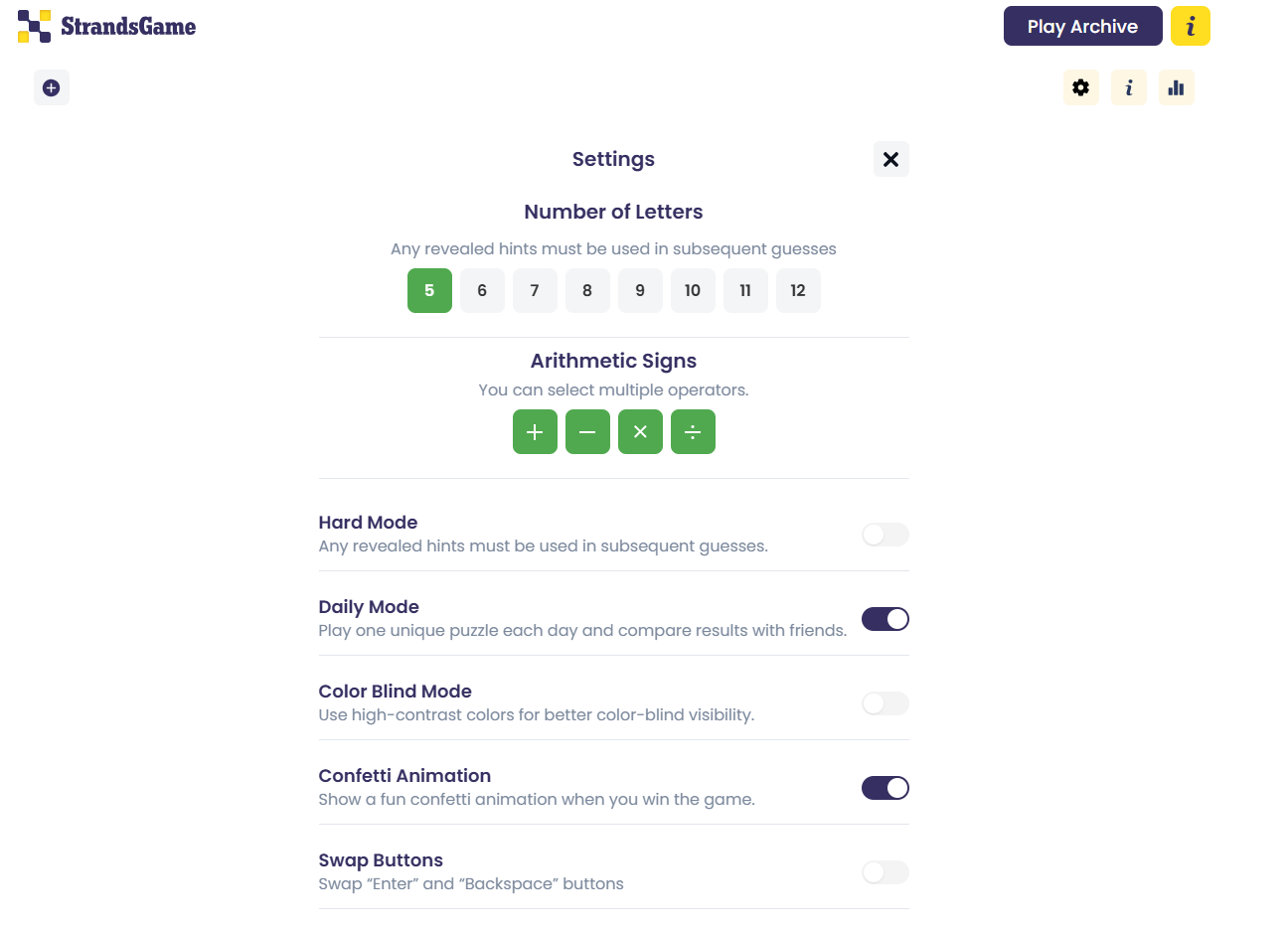
Select any number that you want. These numbers are equivalent to the number of spaces.
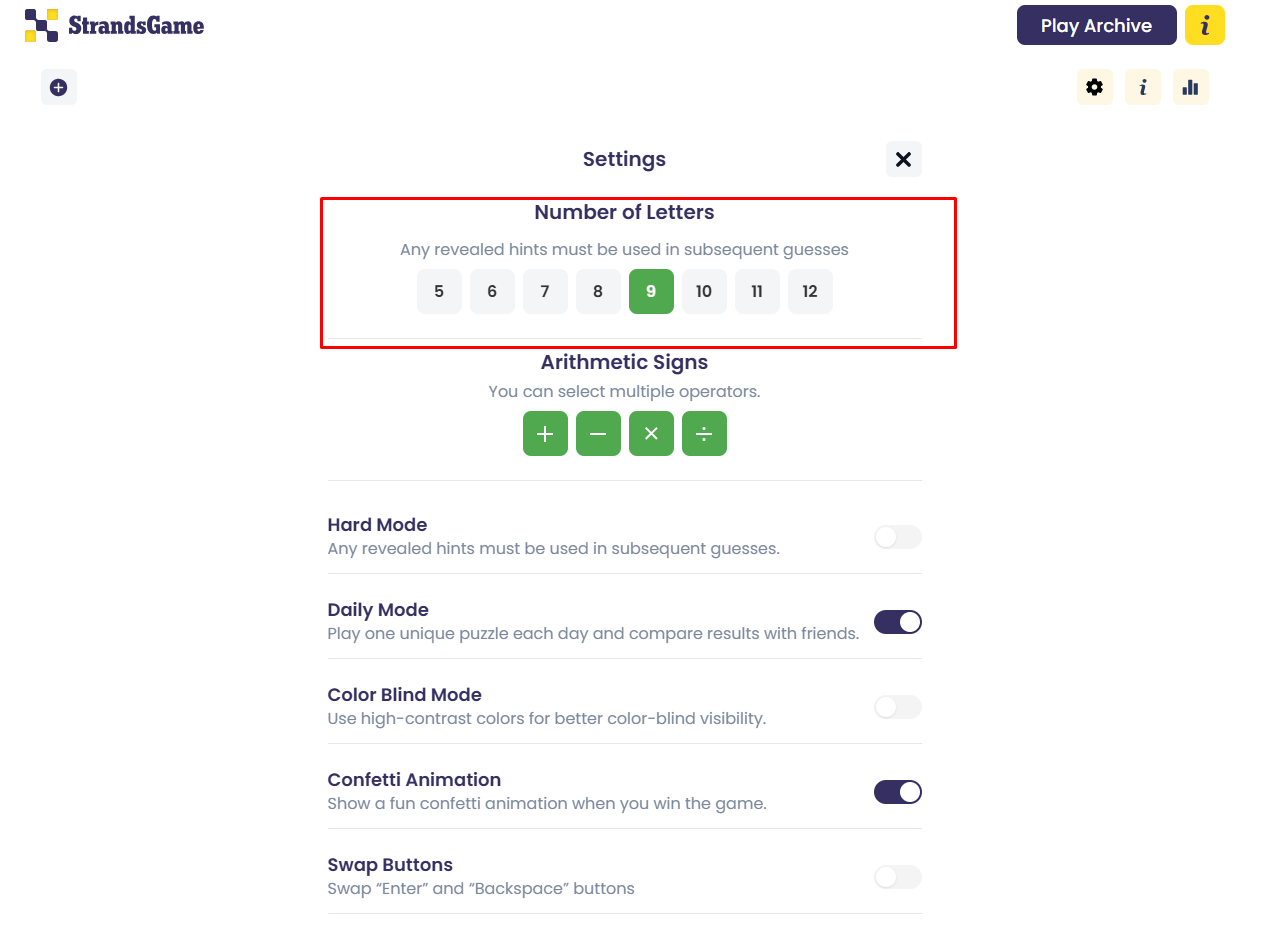
If you click on the 9 number, you will get 9 spaces in a row. But there will only be 6 spaces in a column no matter the number of spaces in a row. Look at the given picture.
Moreover, you can also choose what kind of signs you want. If you want your equations to be only addition, then select the + sign. But if you want equations related to addition and subtraction, then choose + and -. Hence, you can choose the number spaces in a row and arithmetic signs. It depends on your choice of how many spaces or signs you want.
How to Build an Equation?
Begin by analyzing the position of the equals sign. The equals split the equation into two sides. Both sides must have the same mathematical value.
Once you determine a possible position for the equals sign, you can experiment with different numbers and arithmetic signs.
How to Solve Number Equations in Numberle?
Numberle is easy to play. You just need to know the rules and analyze thoroughly. To start solving it, put an equation in the row.
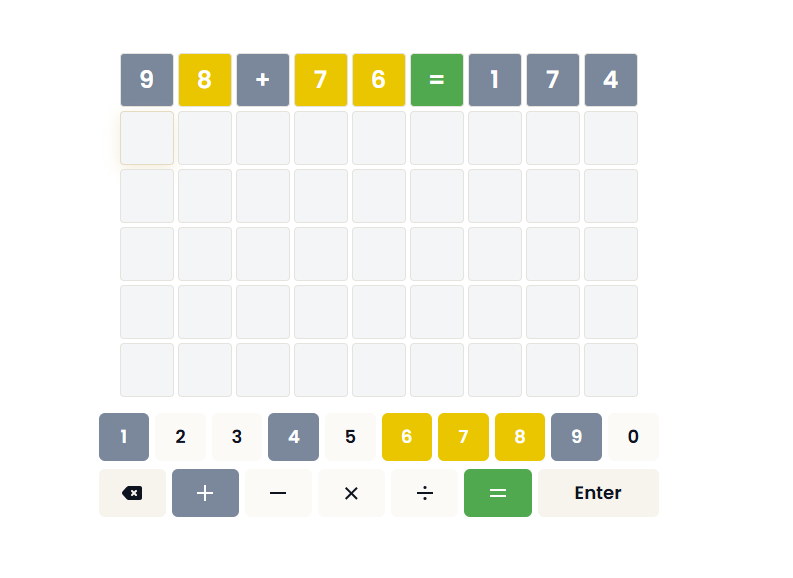
You can see that the boxes have different colours. These are grey, yellow and green. These coloured boxes in Numberle describe whether the number is placed right, wrong or just needs to be put in another place.
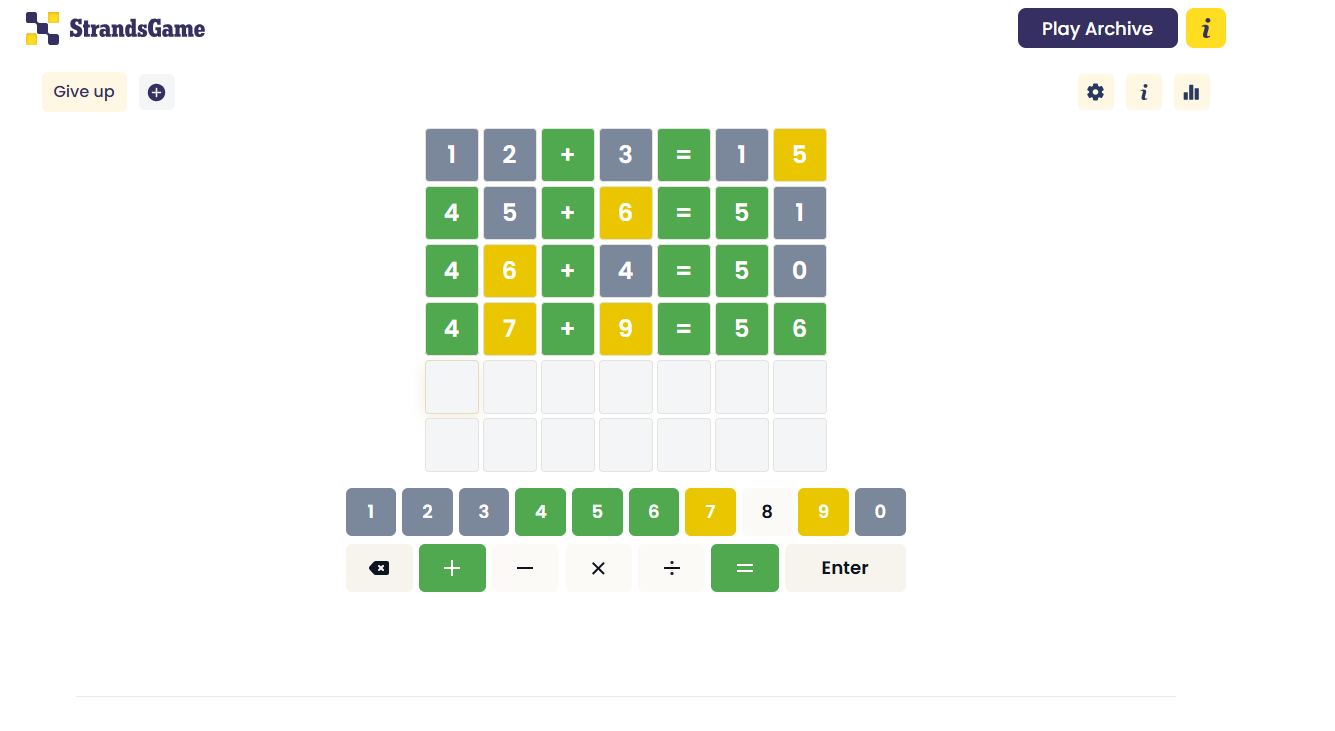
When you put a number and the colour changes to green, it means the number is placed right. When it turns yellow, it means the number is right but not in the right place. If it turns grey, it means neither the number nor the place is right. When we place all the numbers in the correct place, we will win. See the image below.
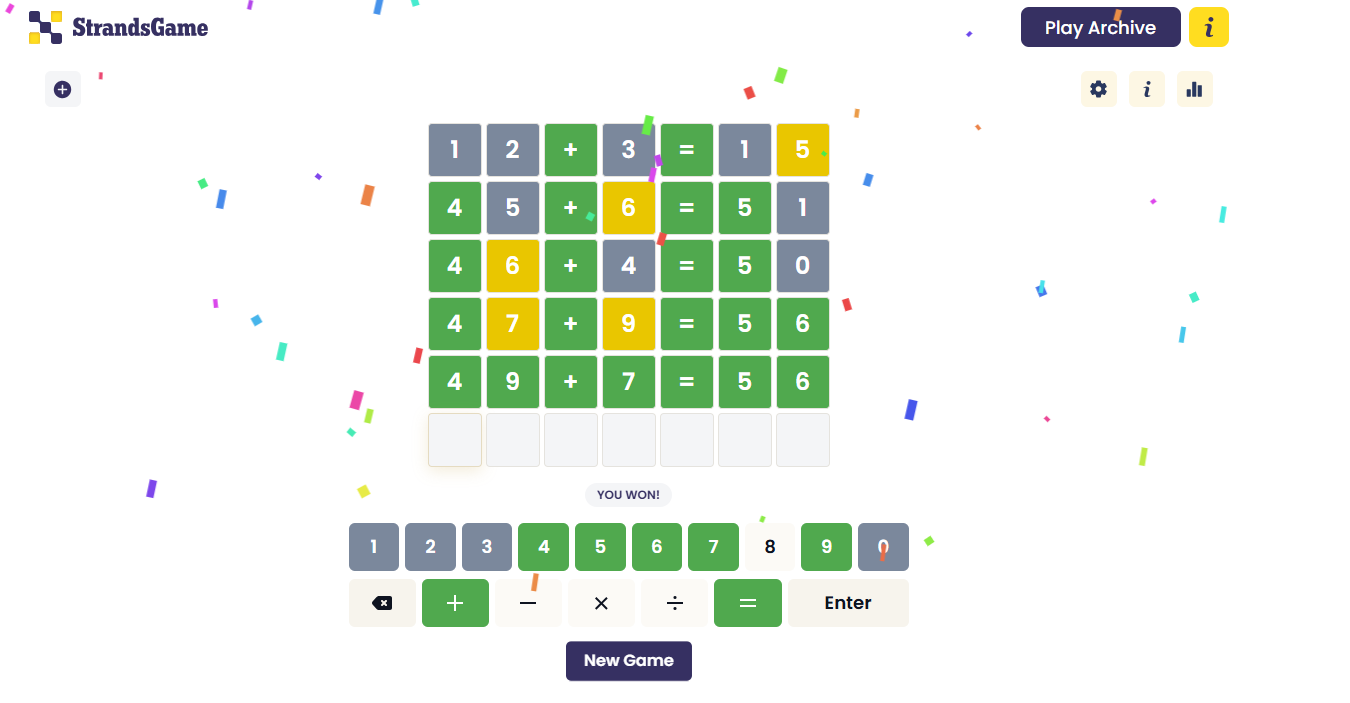
The key is to combine mathematical reasoning with clues. Every attempt should help you to know something about the hidden equation. Like in the above image you can see that 1, 2, 8, + and = have a yellow colour. So we placed them somewhere else. 3, 5 and 9 were grey. So we didn’t use those afterwards.
With practice, you can recognize useful patterns, test digits more efficiently and build valid equations with fewer attempts. The same basic strategy applies no matter the number of rows. You need to understand the available positions, test numbers and symbols, use the feedback, and verify the final equation mathematically.
Final Thoughts
Numberle turns basic arithmetic into a logical puzzle where every number and symbol matters. Making a correct equation needs more than just calculations. It requires proper use of available spaces, positioning numbers and symbols and feedback from previous attempts.
By approaching each puzzle systematically and using every guess as a source of information, you can improve your ability to build and solve Numberle equations and find the correct solution more efficiently.
FAQs
Can I use negative numbers in Numberle equations?
No, you cannot add negative numbers in Numberle equations. The puzzle doesn’t support the minus sign. So you aren’t able to use it as part of an equation. You can only play with the positive numbers (the normal ones), not with negative numbers.
Is it better to start Numberle with simple equations?
Yes. Starting with a simple, valid equation can help you test several digits. It also helps you test the mathematical symbols as well. Once you receive the colour feedback. You can use those clues to make more informed guesses.
Can the same number appear more than once in a Numberle equation?
Yes. The same number can appear more than once in a Numberle equation. Repeated digits are allowed. So you can use the same number multiple times. You just need to pay attention to the feedback from previous guesses. It helps you to determine whether repetition is useful in the current puzzle.
What should I do when I get stuck on a Numberle puzzle?
Review the previous guesses. You can see the grey numbers. You shouldn’t use these numbers again. Try to use the numbers that you haven’t used yet. This will help you to solve the puzzle smoothly. Keep those clues in mind instead of making completely random guesses.
Does a longer Numberle equation make the puzzle harder?
Usually, yes. Longer equations provide more positions and possible combinations. It can make the puzzle more challenging. However they also give you more opportunities to test different numbers and mathematical operations in a single attempt.